
Share:
Table Of Contents
Are VR Arcades Still Profitable in 2026? The Truth Behind the Numbers
In an era where home headsets like the Meta Quest 3 are becoming household items, a burning question remains for entrepreneurs: Are VR arcades profitable in a world of accessible home technology?
The short answer is yes. In fact, 2026 marks a pivotal shift where the local VR arcade is evolving from a mere “tech demo” into a premium social destination. While home VR is convenient, the physical, social, and high-end immersion of a professional venue simply cannot be replicated in a living room.
Here is a deep dive into the profitability, startup expenses, and business logic of running a successful venue this year.
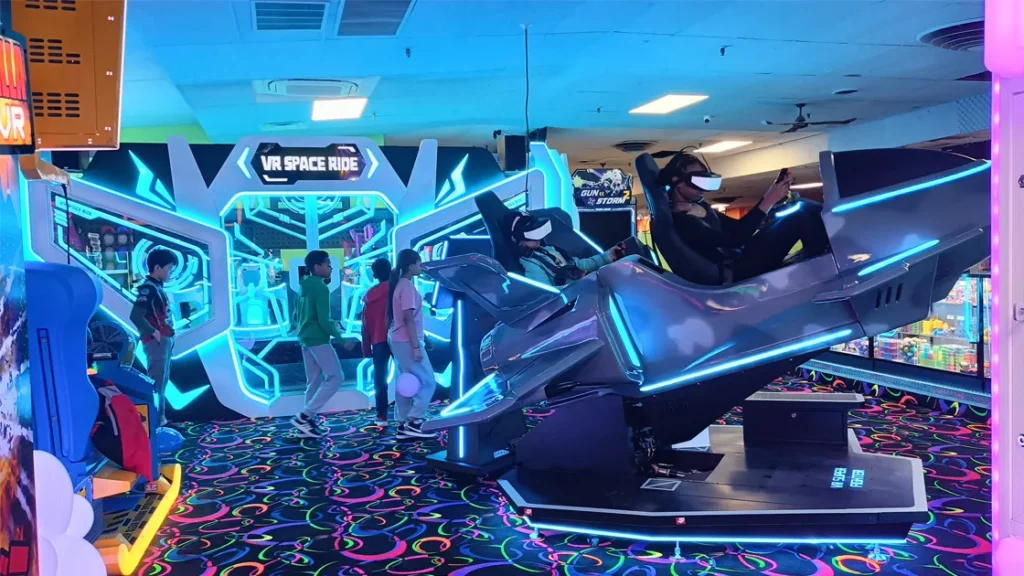
1. The Revenue Model: How a VR Arcade Makes Money
Many people wonder about the financial viability of this industry. To understand if VR arcades are profitable, we must look at their diversified revenue streams:
- Premium Walk-ins: Professional centers offer hardware like multi-axis racing rigs that command higher price points ($25–$50 per session) than standard gaming.
- The Gold Mine: Group Events: Birthday parties and corporate team-building sessions are the #1 revenue drivers. A high-performing VR arcade often makes 40% of its profit from these pre-booked packages.
- The “VR+” Model: Integrating Food & Beverage (F&B) is a game-changer. Data shows that venues offering snacks and beverages increase their average transaction value by over 20%.
2. The Price of Entry: How Much Does It Cost to Open a VR Arcade?
Planning your budget is the first step to success. If you are asking “How much does it cost to open a VR arcade?”, the answer depends heavily on your scale and location.
2026 Investment Tiers
- The Micro-Studio ($50,000 – $100,000): Best for 4–6 stations in a small space (approx. 1,000 sq ft). It focuses on high-quality standalone headsets and curated indie titles.
- The Standard Venue ($150,000 – $350,000): A 2,500+ sq ft facility featuring 10+ stations, a “Free-Roam” arena, and premium vr motion simulators.
- The VR Theme Park ($500,000 – $1.5M+): A massive family entertainment center with multiplayer arenas, haptic suits, and full-service dining.
Typical Expense Breakdown
| Category | Allocation | Details |
|---|---|---|
| Hardware & Tech | 45% | High-end PCs, VR headsets, and motion platforms. |
| Facility Build-out | 25% | Electrical upgrades, soundproofing, and "cyberpunk" decor. |
| Licensing & Software | 10% | Commercial rights for games (Essential for any VR arcade). |
| Operations & Rent | 20% | Deposits, marketing, and the first 3 months of working capital. |
3. Financial Outlook: Investment vs. Payback
The ROI in the location-based entertainment sector remains one of the most attractive for 2026.
- Average Payback Period: Most well-managed studios see a return on investment within 10 to 18 months.
- Target Net Margin: Expect a healthy margin of 15% – 25%, which can climb higher if you master the “party and events” niche.
4. Why Most VR Arcades Fail (And How to Succeed)
While the numbers show that VR arcades are profitable, success isn’t guaranteed. To thrive, you must avoid these common pitfalls:
- Hygiene First: In 2026, cleanliness is part of your brand. Use professional UV-C sterilization for all headsets.
- Location Strategy: VR is a “destination” activity. Don’t pay top-tier mall rent; instead, find a spot near cinemas or dining districts where your target demographic already hangs out.
- Content Freshness: If your game library is stagnant, your repeat customer rate will drop. A successful VR arcade updates its offerings at least once every quarter.
5. Conclusion: Is it a Worthy Investment?
The VR arcade industry has matured. It is no longer just about the “wow factor” of the technology; it is about providing a high-end social experience. For entrepreneurs who can balance operational efficiency with a great customer vibe, the answer to “are they profitable?” is a resounding yes.
Send Us A Message