
Share:
Table Of Contents
The Ultimate Guide: How to Start a Lucrative Laser Tag Business
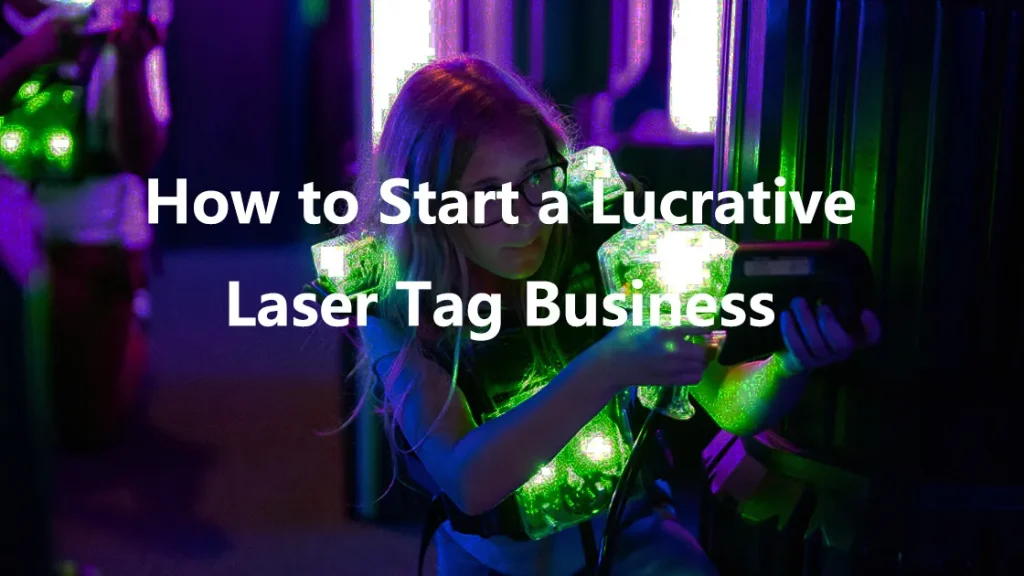
Laser tag is more than just a game; it’s an immersive, high-energy entertainment experience that appeals to all ages. From children’s birthday parties to corporate team-building events, the demand for quality interactive entertainment remains strong and resilient.
If you’re seeking an exciting business venture with strong profit potential and a high return on investment (ROI), starting a laser tag business could be your perfect target.
This guide provides a comprehensive roadmap, walking you through every crucial stage—from initial planning and site selection to final marketing strategies—to successfully launch your own laser tag business.
Step 1: Deep Dive Planning and Market Research
A. The Bedrock: Your Business Plan
A detailed laser tag business plan is the blueprint for your success. It serves as your guide and a necessary document for securing funding.
- Goals and Vision:Clearly define what your laser tag business aims to achieve (e.g., “To be the premier family entertainment center in the tri-county area”).
- Financial Projections:Calculate your startup costs (equipment, leasehold improvements), operational costs (rent, utilities, staffing), and, crucially, your break-even point.
- Mission Statement:Define your commitment to safety, fun, and customer service.
B. Know Your Market and Competition
Understanding the landscape is key to positioning your brand correctly.
- Target Demographics:Who will you serve? (e.g., Families, college students, corporate groups for team-building).
- Competitor Analysis:Visit local competitors (arcades, bowling alleys, existing laser tag centers). Analyze their:
(1)Pricing structures.
(2)Facility aesthetics and cleanliness.
(3)Equipment quality and game variety.
- The Differentiation Strategy:Determine your Unique Selling Proposition (USP). Will you focus on a high-tech, immersive experience? An elaborate theme? Or unbeatable party packages?
C. The Art of Site Selection
Your location is perhaps the most critical factor after your equipment.
- Ideal Characteristics: Look for locations with high visibility, easy freeway access, and ample, dedicated parking.
- Space Requirements:You need adequate space for:
(1)The Arena/Game Field (the largest space).
(2)Briefing Room (for rules and safety talks).
(3)Party Rooms/Event Space (a primary source of high-margin revenue).
(4)Lobby/Check-in and potentially a small F&B (Food & Beverage) area.
Step 2: Facilities and Equipment Preparation
A. Purchasing the Core Laser Tag System
The quality of your commercial laser tag equipment directly impacts the player experience and your maintenance costs.
- System Comparison: Research different systems. Will you opt for a high-end, feature-rich brand known for reliability, or a budget-friendly option? Consider the ongoing costs of replacement vests and phasers.
- Key Equipment Checklist:
(1)Vests and Phasers (sufficient for peak capacity).
(2)Charging Racks and Control Software.
(3)Scoreboards and Display Systems.
- Vendor Selection:Prioritize laser tag equipment manufacturer / supplier who offer robust warranties, excellent technical support, and reliable maintenance contracts. Such as Zone Laser Tag, LASERWAR, Lasertag.Net, Funspace.
B. Designing and Building the Arena
The arena is your main product—it must be memorable.
- Theme Selection:Choose a compelling theme (e.g., Futuristic Cityscape, Post-Apocalyptic Ruins, Alien World).
- Key Design Elements:
(1)Layout: Complex, multi-level layouts often enhance the experience.
(2)Atmospherics: Strategic use of black lights, fog machines, and professional sound systems.
(3)Obstacles: Ensure obstacles and vantage points encourage tactical play.
- Safety Standards: Adhere strictly to local building codes, fire safety regulations, and OSHA guidelines. Ensure non-slip flooring and clearly marked emergency exits.
Tips:Some laser tag suppliers offer Laser Tag Business Solution integrates high-performance laser countermeasures equipment, an intelligent site management system, and professional laser tag arena design. When selecting a supplier, you can prioritize providers offering this service, such as Funspace.
C. Ancillary Facilities and Revenue Streams
Maximize your revenue potential beyond just game ticket sales.
- Add-ons: Install an arcadecenter, a soft play area for younger siblings, or a redemption prize counter.
- Food and Beverage: Offer simple, high-margin items like pizza, soft drinks, and snacks.
- Rental Space: Leverage your party rooms for corporate bookings, team training, or private events during off-peak hours.
Step 3: Legal, Financial, and Operational Foundation
A. Legal and Licensing Requirements
Starting legally ensures stability and avoids costly fines.
- Business Structure: Register your business (e.g., LLC, Corporation) with your state and obtain an EIN from the IRS.
- Permits: Secure all necessary local and state permits, including health permits (if serving food) and fire/safety certifications.
- Insurance: This is critical. You must obtain General Liability Insurance to cover potential injuries, as well as property insurance to protect your investment in the facility and equipment.
B. Building Your Team
Your staff are the face of your business and integral to the customer experience.
- Key Roles:Hire a dedicated Manager, enthusiastic Game Marshals (referees), and friendly Front Desk Staff.
- Training Protocol:Implement rigorous training covering:
(1)Equipment operation and troubleshooting.
(2)Safety procedures and conflict resolution.
(3)Exceptional customer service and party hosting skills.
C. Pricing Strategy
Your pricing must cover costs while remaining competitive.
- Tiered Pricing: Offer options like single-game tickets, 1-hour unlimited play passes, and significant discounts for large group or party packages.
- Promotions: Utilize lower pricing for non-peak times (e.g., weekday afternoons) to drive traffic and maximize facility usage.
Step 4: Marketing and Promotion
A. Digital Marketing Strategy
In today’s market, online visibility is non-negotiable.
- Professional Website:Develop a mobile-responsive site with high-quality photos, clear pricing, and an easy-to-use online booking system.
- Social Media: Engage on platforms like Instagram and TikTok. Post dynamic game footage, host photo contests, and highlight positive customer experiences.
- Local SEO:Ensure your business is accurately listed on Google My Business, Yelp, and local directories to attract nearby search traffic.
B. Community and Offline Outreach
Build relationships within your community.
- Partnerships: Reach out to local schools for field trips, summer camps for bulk bookings, and companies for corporate event packages.
- Grand Opening Event:Host a massive event with local media coverage, special pricing, and perhaps a raffle for a free party package.
- Word-of-Mouth:Implement a simple yet effective loyalty program or a referral discount to incentivize existing customers to bring in new ones.
C. Delivering an Exceptional Customer Experience
Retention is cheaper than acquisition. A happy customer is a repeat customer.
- Hospitality Focus:Ensure every interaction, from booking to checkout, is friendly and professional.
- Feedback Loop:Actively solicit customer feedback (surveys, review platforms) and demonstrate that you are using it to continuously improve the experience.
Conclusion
Setting up a laser tag business requires meticulous planning, a significant upfront investment, and a commitment to customer service. By securing a prime location, investing in quality equipment, and executing a robust marketing plan, you can tap into this exciting entertainment market.
Remember that technology evolves. Commit to regularly refreshing your game environment or updating your technology to keep the experience fresh and thrilling for loyal customers.
FAQ
A1:Laser tag services are mainly divided into three categories: Fixed Indoor Arena, Mobile/Outdoor Laser Tag, and Hybrid/Auxiliary.
Fixed Indoor Arena
- Characteristics: The most traditional type. Held in a dark, maze-like, usually themed, fixed building.
- Target customers: Family entertainment centers, birthday parties, teenagers.
Mobile/Outdoor Laser Tag
- Features: Uses portable equipment and inflatable obstacles, can be set up in parks, backyards, or client-specified locations. Typically a rental service.
- Target Customers: Team building activities, summer camps, school events, private parties.
Hybrid/Auxiliary
- Features: Laser tag is installed as a supplement to the main business within existing entertainment centers, such as bowling alleys, ice rinks, or family entertainment centers (FECs) in large shopping malls.
A2:The cost of starting a laser tag business varies greatly, mainly depending on the type of business:
- Mobile or small outdoor venues: Initial investment is approximately $8,000 to $45,000The exact amount depends on the quantity and quality of the equipment.
- Large Indoor Arena: Building a full-fledged center from scratch typically requires a budget of at least $100,000, and can even exceed $250,000.
Major costs include venue rental/purchase, arena design and construction, and laser tag equipment.
A3:The required space depends on the type of business you choose:
Indoor Arena:
- Recommended area: At least 3,000 to 5,000 square feet(approximately 280 to 465 square feet) Square meters): This refers to the area of the arena itself only.
- Total area (including lobby/party room): The entire facility typically requires 5,000 to 10,000 square feet(approximately 465 to 930 square meters).
Mobile/Outdoor:
- Minimum requirements: At least one open area is required, such as the size of a large backyard or basketball court, approximately 40 x 50 feet(approximately 12 x 15 meters).
A4:Yes, laser tag is still very popular.
Although it’s no longer a novel form of entertainment, it remains a major attraction in family entertainment centers (FECs), shopping malls, and party venues worldwide.
- Sustained Appeal: It offers a safe, low-intensity physical activity and competitive entertainment suitable for all ages.
- Market Evolution: Many venues now combine laser tag with other entertainment options such as arcade games, go-karting, and vr game machine to attract a wider customer base.
- Technological Advancements: Modern equipment is more advanced, reliable, and offers a greater variety of game modes.
A5:This is the most common risk. Arenas are typically dimly lit, with uneven surfaces or ramps/obstacles, making it easy for players to trip, slip, or bump into walls/others while running.
- Exertion and Sprains:Muscle strains and sprains (especially ankles and knees) can occur due to rapid movement, bending, or dodging.
- Vision/Headache Issues:The strobe lights, black light, and smoke used in arenas can cause discomfort for people with photosensitive epilepsy or migraines.
- Equipment Safety:Although called “laser,” it emits only low-power infrared beams, which are safe for the eyes (not true dangerous lasers). The weight of the equipment or improper clothing may also cause minor discomfort.
Summary: Most risks are related to rapid running in dimly lit, obstacle-filled environments, rather than the equipment itself.
A6:To make a laser tag business successful, the core lies in providing an excellent customer experience and efficient operations:
- Superior Arena Design: Creating an immersive, high-quality themed environment (lighting, sound effects, obstacles, smoke). The design must be fun and encourage repeat play.
- Maintenance & Tech Update: Ensure equipment (vests, guns) is always in perfect working order. Regularly invest in the latest game systems and technologies to keep things fresh.
- Focus on Customer Experience: Have friendly, efficient staff capable of quickly handling large volumes of parties and groups. Ensure short, clear safety and game instructions.
- Diversify Revenue Streams: Never rely solely on laser tag. Maximize spending per customer by combining it with party rooms, food and beverage (F&B), video games, or other entertainment facilities.
- Effective Marketing: Proactively target high-value group customers (birthday parties, corporate team building, school trips) and leverage social media for promotion.
Send Us A Message