
Share:
Table Of Contents
The Ultimate Guide To Arcade Rhythm Game Types
Step into a bustling arcade. Beyond the cheers at the claw machines and the roar of racing games, there’s a corner that radiates a unique charm: dazzling lights, pulsating music, and players fully immersed, their fingers flying across panels in a dance with the on-screen notes. This is the realm of the arcade rhythm game.
Faced with these machines featuring all sorts of buttons, screens, and controllers, have you ever felt curious yet confused? What exactly is the difference between them? Where should a beginner even start? Worry not! This guide will systematically break down the major types of rhythm arcade machines, helping you find your perfect match in this rhythm heaven.
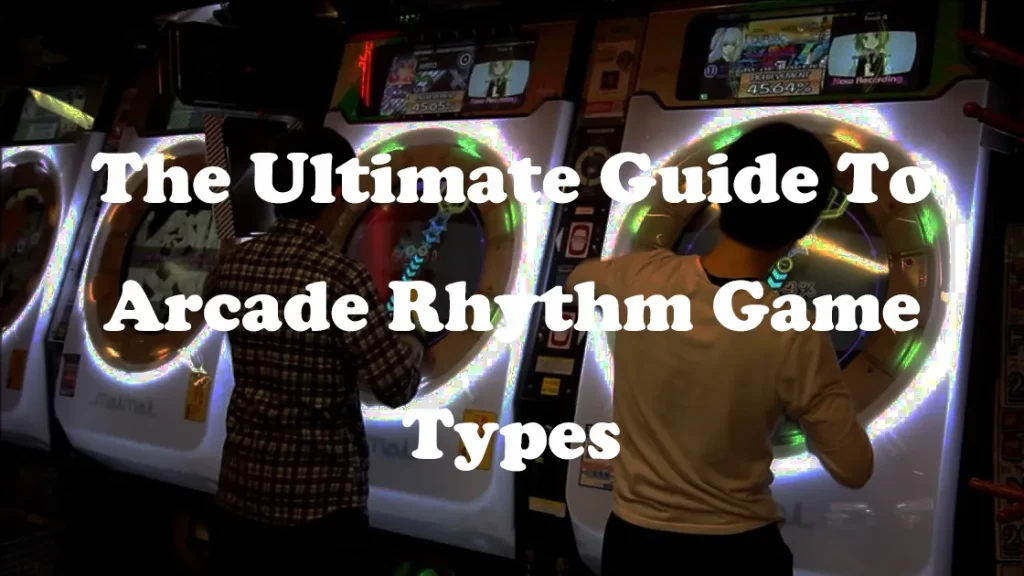
What Is An Arcade Rhythm Game?
In simple terms, it’s a rhythm game specifically designed for arcade platforms. The core gameplay is this: you synchronize your actions with the beat of the music, inputting commands (like pressing buttons, tapping, or sliding) at the precise moment to complete a “chart” and score points.
Its ultimate appeal lies in the perfect fusion of music, visual feedback, and the thrill of execution, delivering an immersive “oneness” with the machine and an unparalleled sense of achievement.
The Family Tree of Rhythm Game Arcade Machines
So, what are the specific play styles? We can categorize them into the following main types based on their core mechanics:
1. The Timeless Classic: The Falling Notes Arcade Rhythm Game
Core Gameplay: This is the most classic type. Notes travel down fixed tracks from the top of the screen. Your job is to hit the corresponding keys as they reach the stationary judgment line at the bottom.
Visual Metaphor: It’s like “catching raindrops falling from the sky.”
Representative Rhythm Arcade Machines:
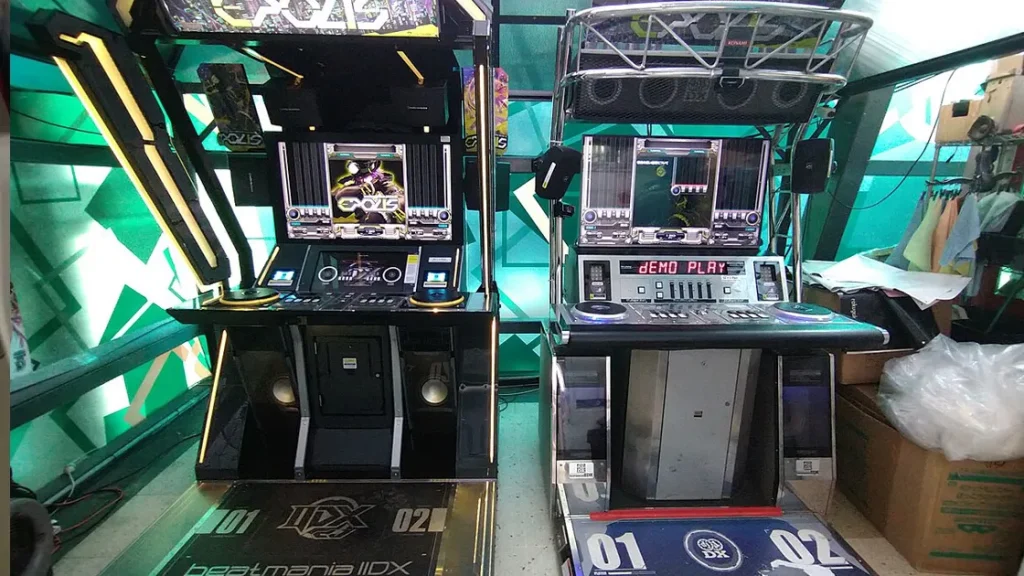
《Beatmania IIDX》: The “bible” of hardcore arcade rhythm games. It uses 7 keys + 1 turntable and is the ultimate test for seasoned players.
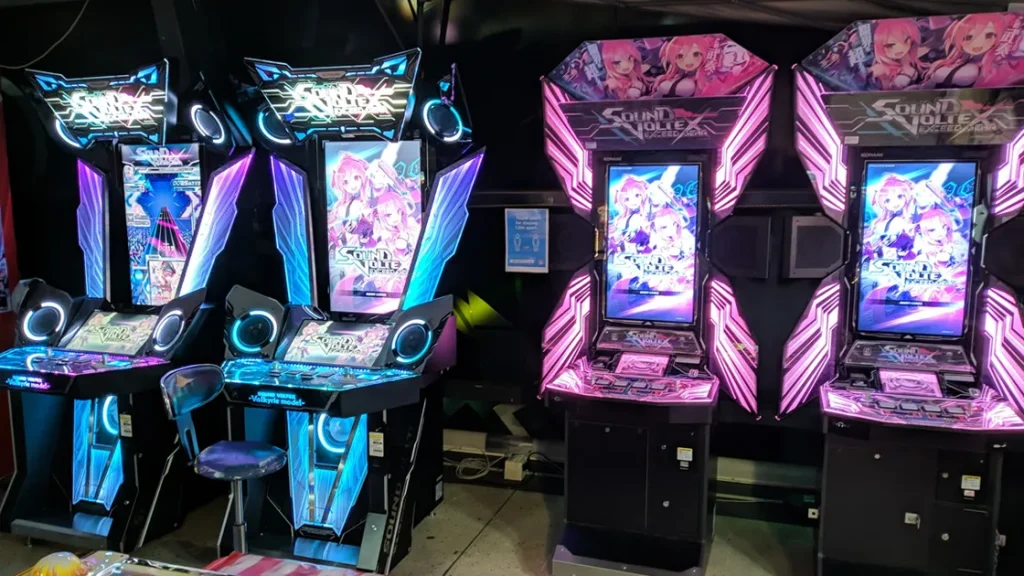
《Sound Voltex》: Known as the “DJ simulator.” Beyond buttons, it adds laser keys and two large knobs, making it incredibly flashy and satisfying to play.
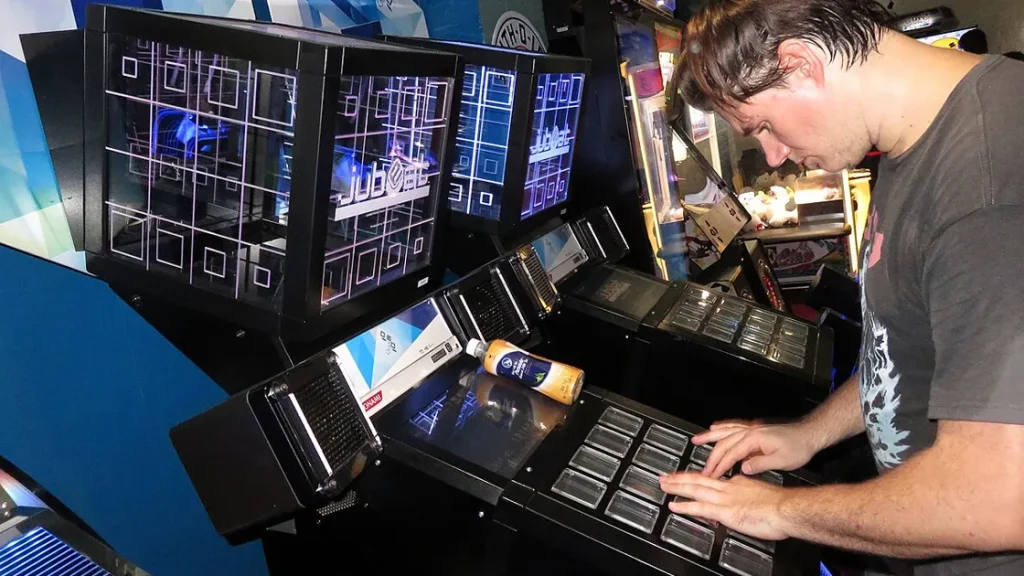
《jubeat》: Features a 4×4 grid of 16 touch-sensitive squares. Notes appear in the panels, offering a strong, rhythmic tap-based gameplay.
Summary: The most fundamental and profoundly deep category. It rigorously tests your ability to read vertical patterns and maintain rhythmic stability.
2. The Flowing Melody: Lane-Based Rhythm Arcade Machine
Core Gameplay: Notes don’t fall vertically; instead, they move along pre-set, often curved or angled lanes towards target points on the screen.
Visual Metaphor: It’s like “watching a car travel along a rollercoaster track to the finish line.”
Representative Rhythm Game Machines:
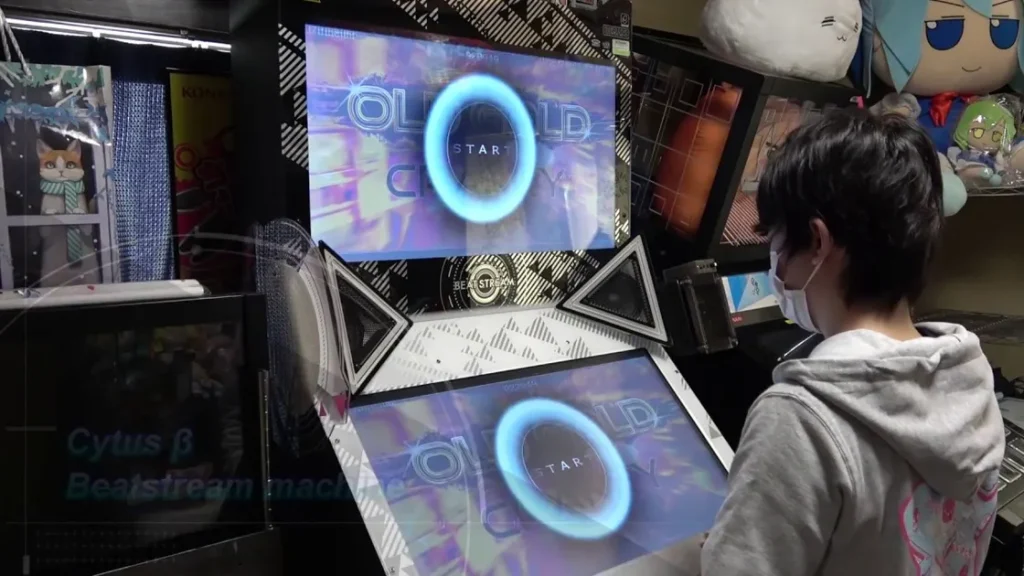
《Cytus》: Features a unique horizontal “scan line” that moves up and down the screen. You hit the stationary notes when the line passes over them.
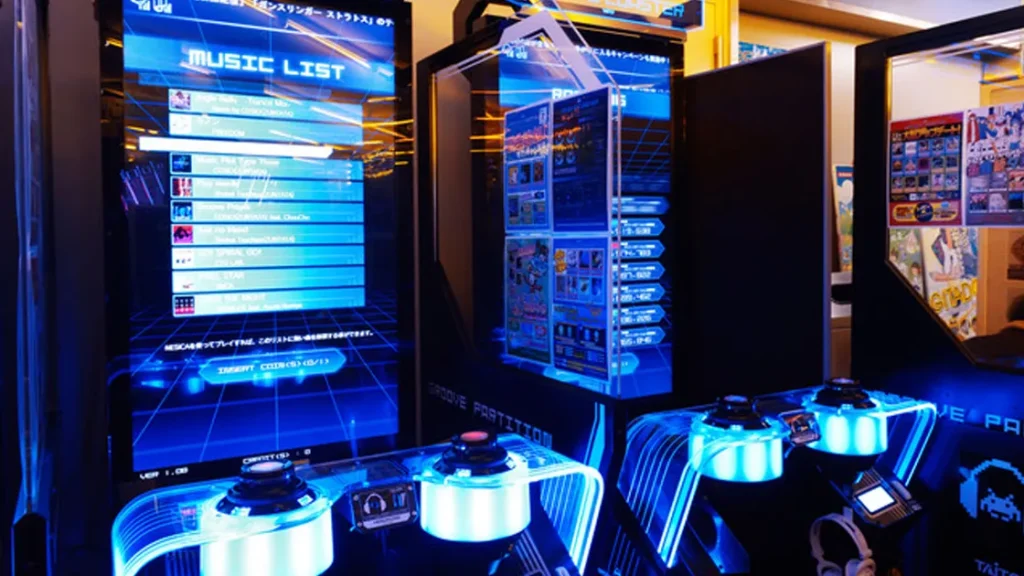
《GROOVE COASTER》:It features a simple two-button controller (or touch screen). The core gameplay involves hitting notes as a moving “cursor” passes over them on a roller-coaster-like track that zooms in, out, and twists in 3D space. It perfectly embodies the “flowing melody” concept.
Summary: Offers a more fluid visual and melodic experience. It requires your eyes to smoothly follow the path of the lanes.
3. The Dynamic Spectacle: Multi-Directional / Dynamic Lane Rhythm Game Machine
Core Gameplay: An evolved, “wild” version of the falling-note style! The lanes themselves are dynamic—they rotate, move, and scale. Notes assault you from all directions.
Visual Metaphor: It’s like “navigating a gorgeous and orderly bullet hell storm.”
Representative Music Arcade Machines:
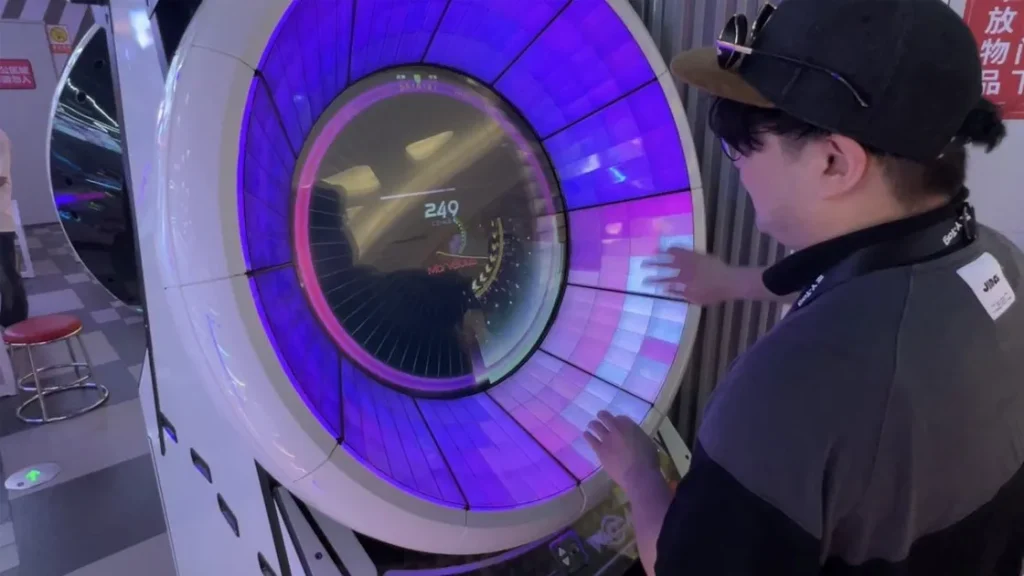
《WACCA》: Uses a central circular design with notes radiating outwards. The lanes spin and warp dramatically, creating a spectacular, futuristic feel.
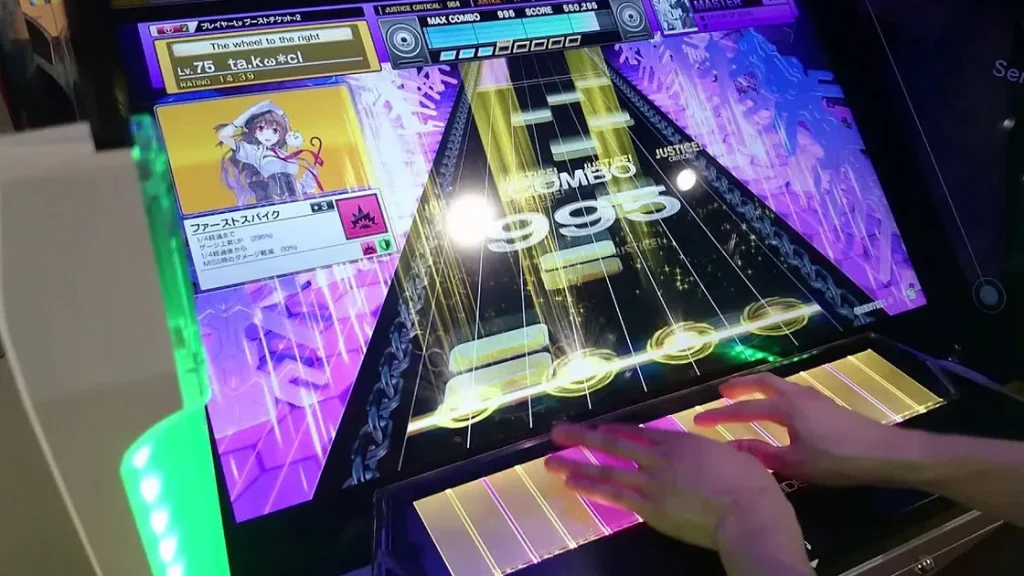
《CHUNITHM》: Combines standard key taps with aerial touch sliders. The lanes can also tilt, providing diverse gameplay.
Summary: Pushes your dynamic vision, spatial awareness, and reaction speed to the limit. It delivers the highest visual impact and is a favorite for players seeking novelty and challenge.
4. Tap It All: Touch-Screen Music Arcade
Core Gameplay: Simple and direct—you use your hands to tap, slide, and hold on a large touch screen.
Representative Rhythm Arcade Machines:
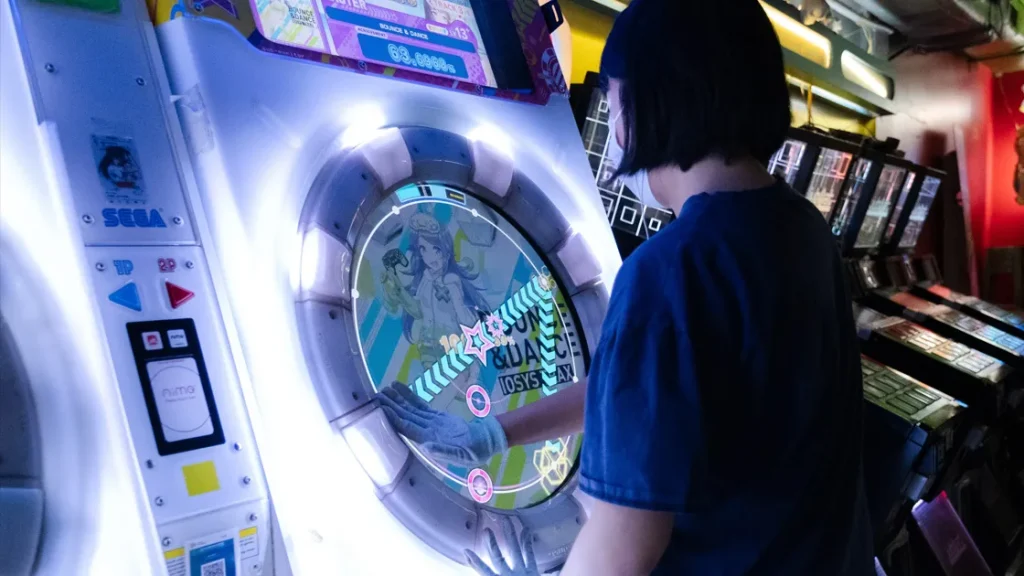
《maimai》: A quintessential music arcade title. It features a circular screen surrounded by 8 buttons, combining taps and slides for satisfying and social gameplay (often nicknamed “the washer”).
《Taiko no Tatsujin》: Simulates drumming on a Taiko drum. Its rules are easy to grasp, and its music library is family-friendly, making it the perfect introduction to rhythm game arcade for many.
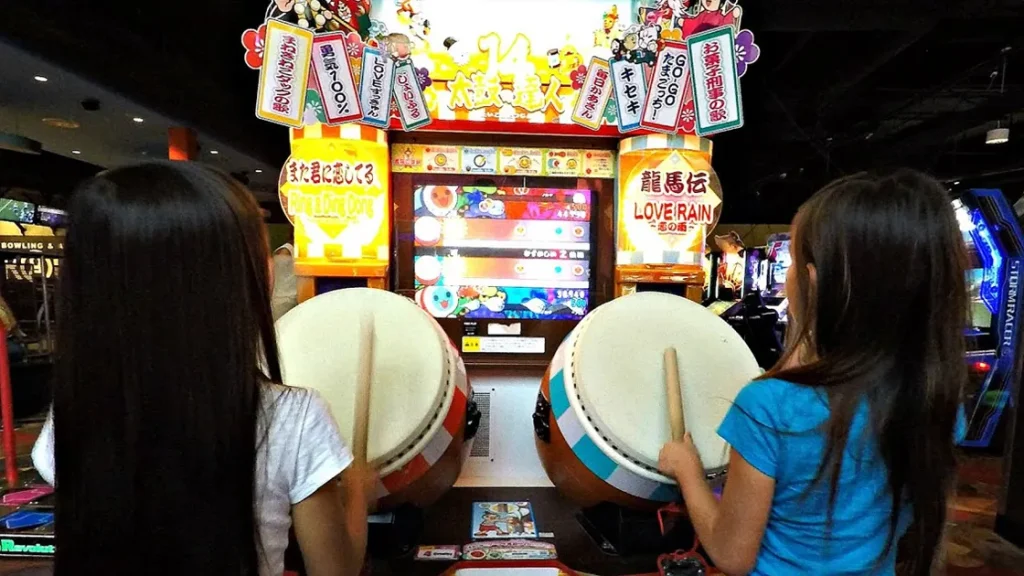
Summary: Low barrier to entry with intuitive controls. It offers a cathartic, “swatting mosquitoes” kind of fun and is perfect for playing with friends.
5. Full-Body Groove: Motion-Sensing Arcade Rhythm Game
Core Gameplay: Free your hands! This type uses specialized peripherals (dance pads, cameras, VR gear) to track your whole body’s movements.
Representative Machines:
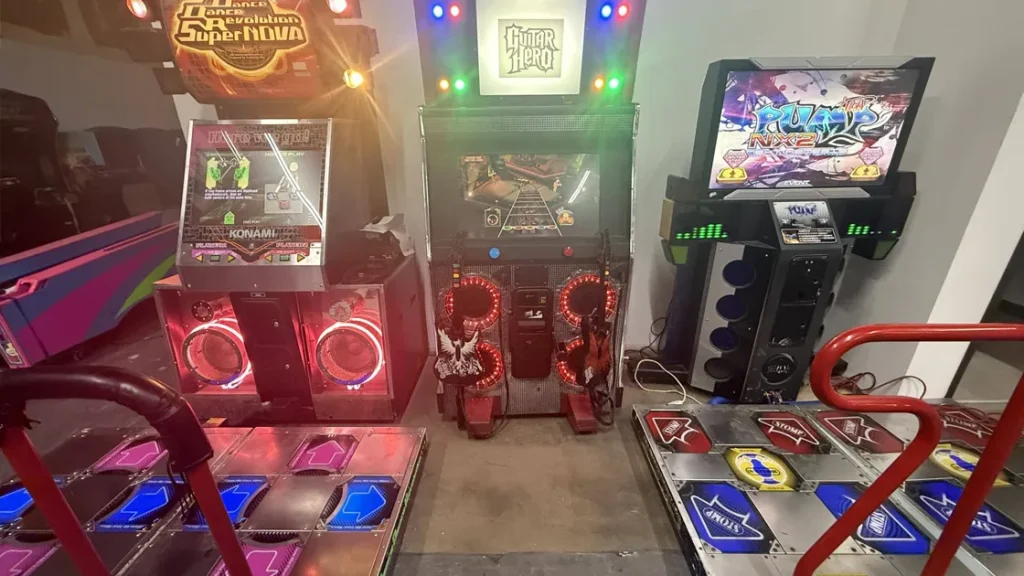
《Dance Dance Revolution (DDR)》: The synonym for dance games. It’s a genuine full-body workout that makes you sweat to the beat.
《VR Beat Saber》: The undisputed king of VR arcade rhythm games. You slash incoming blocks with light sabers, offering an unmatched immersive experience.
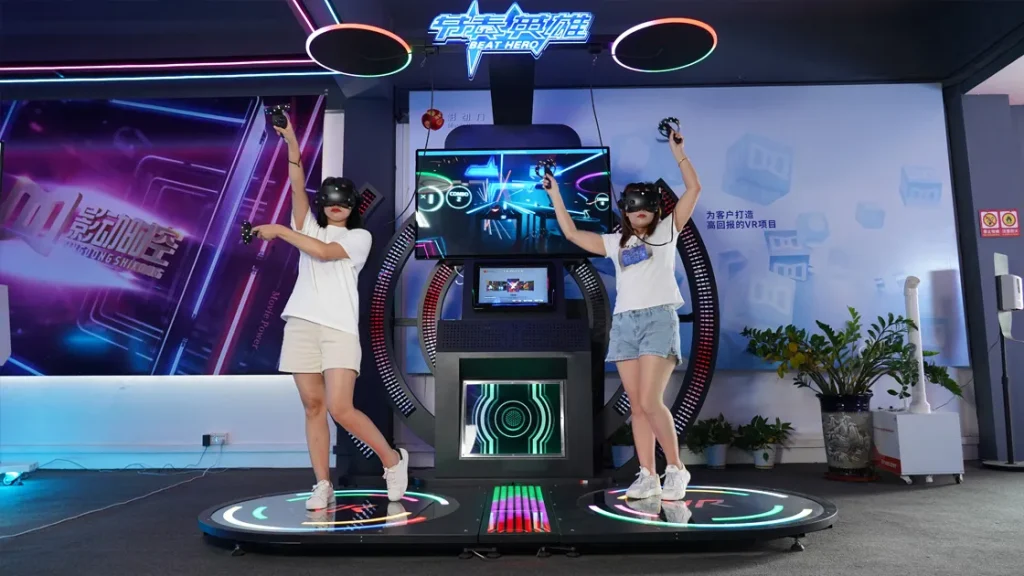
Summary: The perfect blend of entertainment and exercise. It’s the ultimate party starter.
Beginner's Guide: How to Choose Your First Rhythm Arcade Machine
Feeling overwhelmed? Don’t be! Here’s a quick guide to find your starting point:
- If you’re a complete beginner: Start with 《Taiko no Tatsujin》 or 《maimai》! The rules are straightforward, the music is widely appealing, and they quickly deliver the fun of a rhythm game arcade.
- If you crave cool, tactile controls: 《Sound Voltex》 is your go-to. The moment you twist those knobs, you’ll feel like a star DJ.
- If you’re a hardcore challenger: Dive straight into 《Beatmania IIDX》 or 《WACCA》 to experience the depth and difficulty at the pinnacle of arcade rhythm games.
- If you love playing with friends: The 2-player mode in 《Taiko no Tatsujin》 or a head-to-head battle on 《DDR》 doubles the fun.
The ultimate advice is just one thing: Be bold and try them! Most rhythm game arcade machines have a demo or “credit” mode (often cheaper than a full game). Playing one round yourself is more effective than reading ten guides.
Conclusion
No matter how the gameplay evolves or the controllers innovate, the heart of the arcade rhythm game remains the same—it’s the interaction between person and music. It’s the pure joy of externalizing your inner rhythm and “performing” a melody through your own actions.
We hope this guide helps you open the door to this exciting new world. Now, we’d love to hear from you! Share your favorite type of rhythm arcade machine or your own entry story into the scene in the comments below
Send Us A Message