
Share:
Table Of Contents
The Ultimate Guide to Types of Racing Arcade Machines: Designs, Controls, and Experiences
Direct Answer: What are Racing Arcade Machines?
Racing arcade machines are interactive amusement devices designed to simulate high-speed vehicle competition for commercial and entertainment venues. In 2026, the global arcade industry categorizes each type of racing arcade machines based on three core dimensions: Cabinet Design (ergonomics), Control Genre (interface), and Gameplay Style (software experience). Understanding these categories is essential for purchasing the right equipment for your FEC, hotel, or showroom to maximize ROI.
Introduction
The racing genre has been the undisputed king of the arcade floor since the 1970s. From the pixelated roads of Night Driver to today’s hyper-realistic, motion-based VR simulations, the thrill of speed remains a universal attraction. However, in 2026, the simple term “racing machine” doesn’t cover the complexity of the market. This guide provides a definitive breakdown of every modern type of racing arcade machine, empowering business owners to make informed purchasing decisions based on their space, budget, and target audience.
Classification by Cabinet Design
Based on cabinet design, they can be divided into the following four categories: Upright / Stand-up Racing Arcade Cabinets, Classic Sit-down Racing Arcade Cabinets, Modern Deluxe / Cockpit Cabinets, Motion Racing Simulator. The physical cabinet design determines the machine’s footprint, the player’s posture, and the level of physical comfort during extended play.
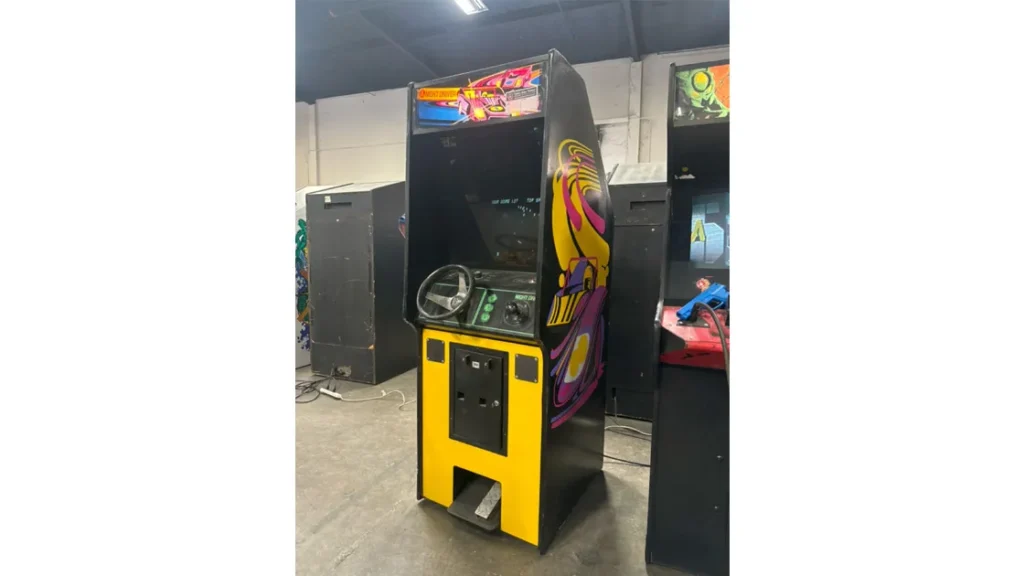
- Upright / Stand-up Racing Arcade Cabinets: This is the most traditional form. The player typically stands while operating the controls. While less common in modern racing, it is essential for retro-style spaces or locations with extreme space constraints. Early pioneers like Atari’s Night Driver utilized this design.
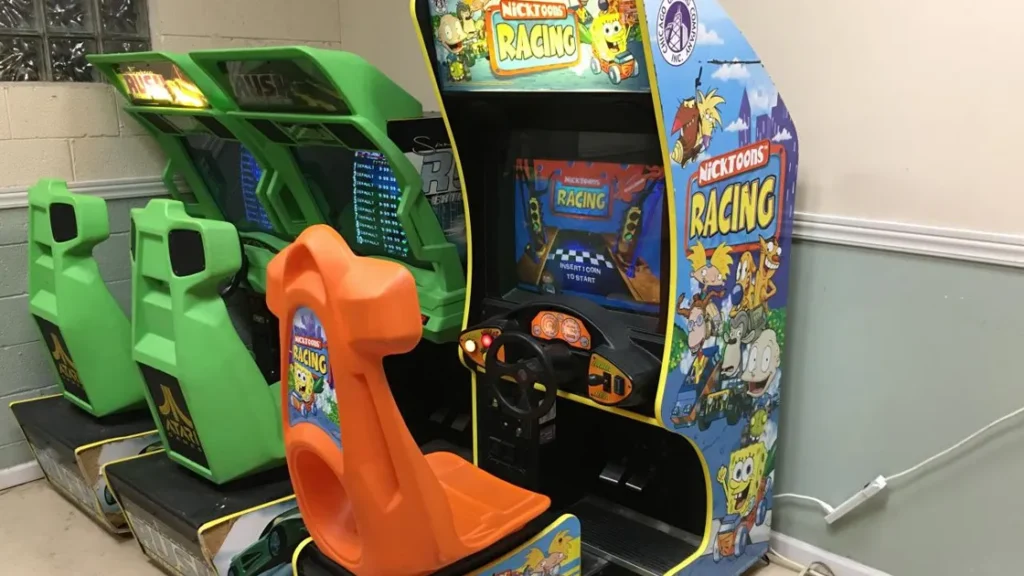
- Classic Sit-down Racing Arcade Cabinets: These classic units feature a professional racing seat (designed for a natural sitting posture to maximize comfort), a compact 25 – 29 inch CRT display, and a complete control unit comprising a steering wheel, gear shifter, and pedals. Occupying a footprint of just 1.5 – 2.0 m², they are ideally suited for smaller arcades with limited space.
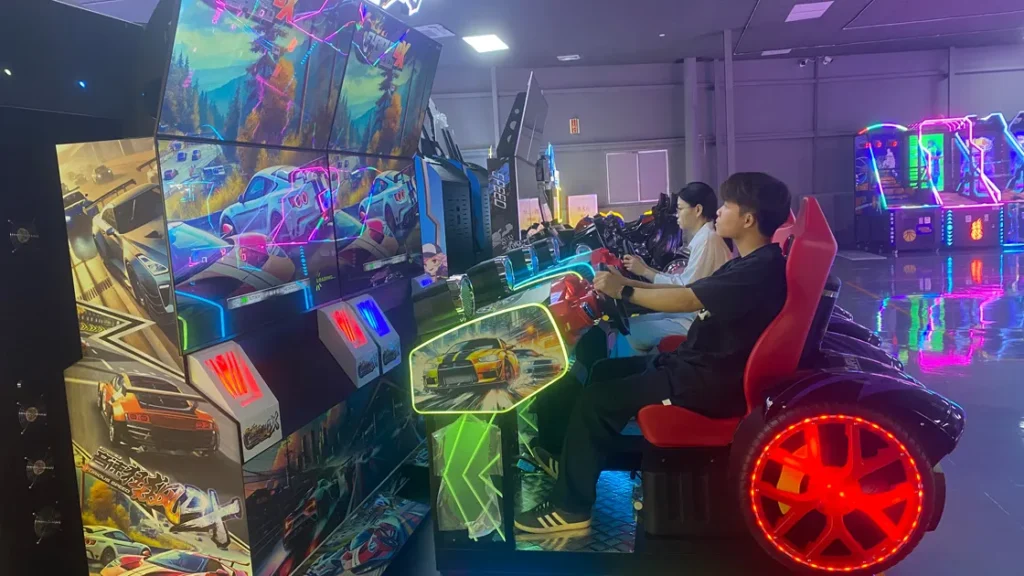
- Modern Deluxe / Cockpit Cabinets: uilding upon the classic design, these modern luxury cockpit-style racing cabinets have undergone a comprehensive upgrade. They feature a larger cabinet chassis accented with dazzling lighting effects, a high-definition LCD/LED screen ranging from 32 to 55 inches, and support for immersive special effects—such as multiplayer linking, dynamic motion bases, and wind simulation—to deliver a truly breathtaking driving experience.
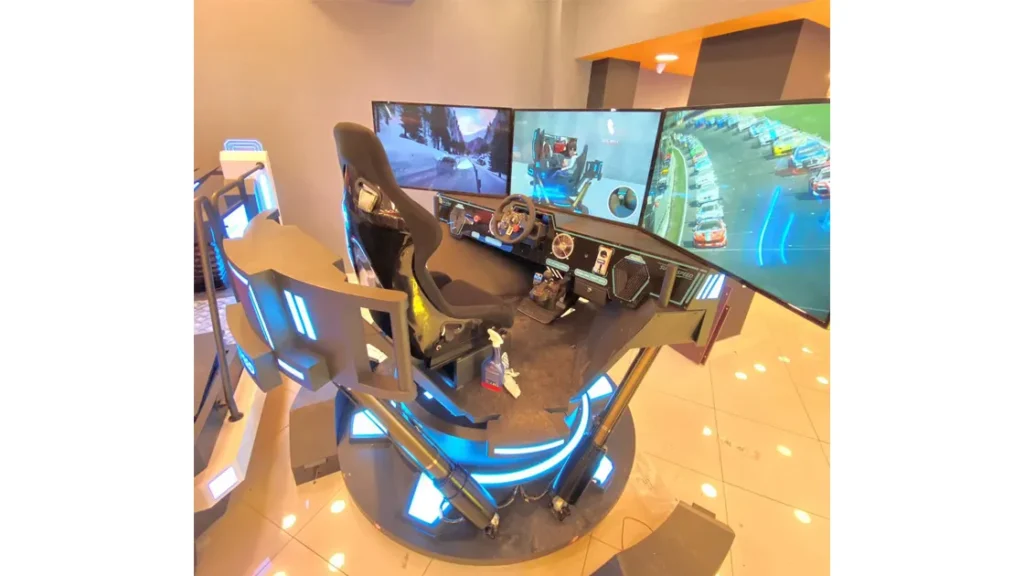
- Motion Racing Simulator: The pinnacle of high-end arcades. These machines integrate hydraulic or electric servo systems beneath the seat. The chair tilts and vibrates in real-time response to in-game turns, acceleration, and collisions.(For instance, the “Super Engine“—manufactured by Funspace—employs this specific design.)
Classification by Control Genre
Based on control type, they can be divided into the following three main categories: Car Racing Arcade Game Machines, Motorcycle Arcade Machines, and Other Specialty Vehicles. How the player interacts with the machine dictates the type of gameplay and ergonomic requirements. The arcade experience has expanded far beyond just the steering wheel.
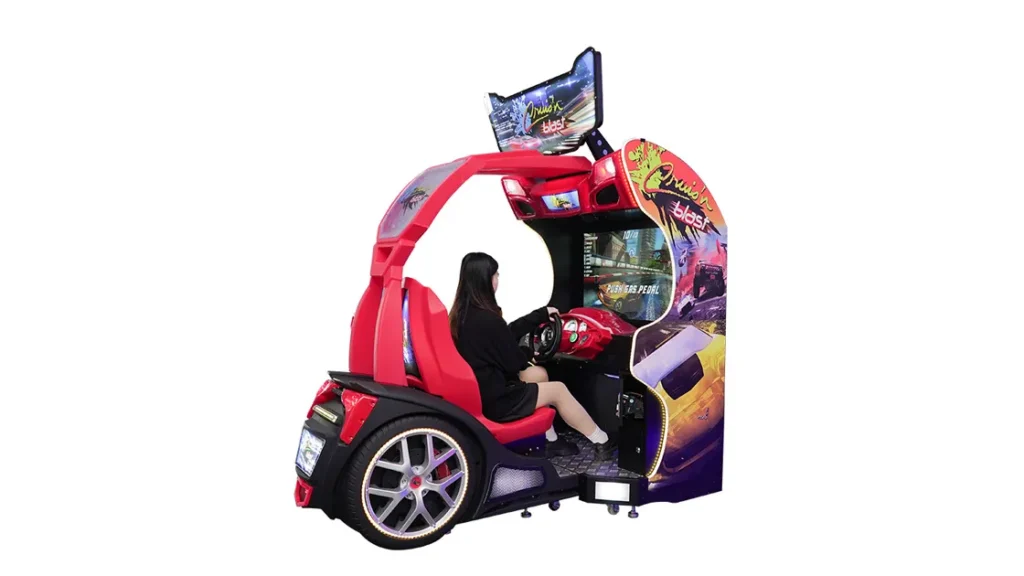
- Car Racing Arcade Game Machines (Classic): Uses standard driving controls: a steering wheel, pedals (gas/brake), and a gear shifter. This includes both casual “drift” games like Initial D and high-octane racers like Cruis’n Blast.
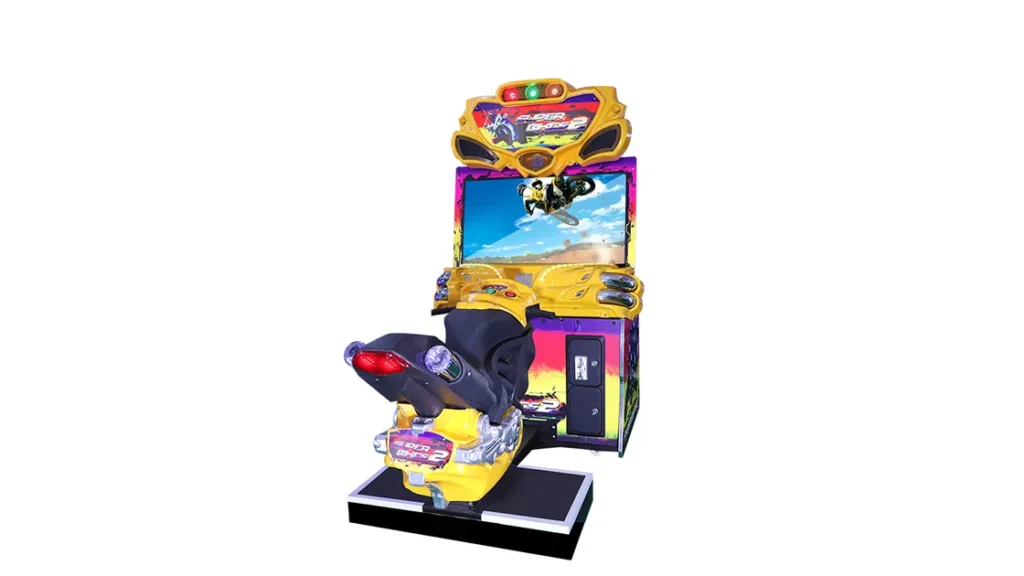
- Motorcycle Arcade Machine (The Lean Machine): Players sit astride a full-scale motorcycle replica. Steering is handled by physically leaning the bike model left and right. Popular examples include MotoGP Arcade and the Super Bikes
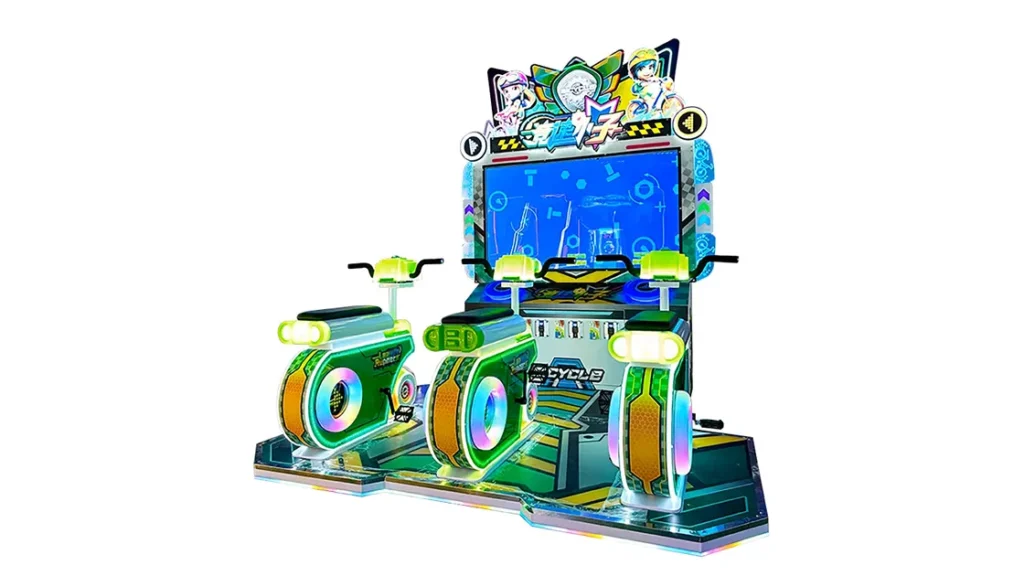
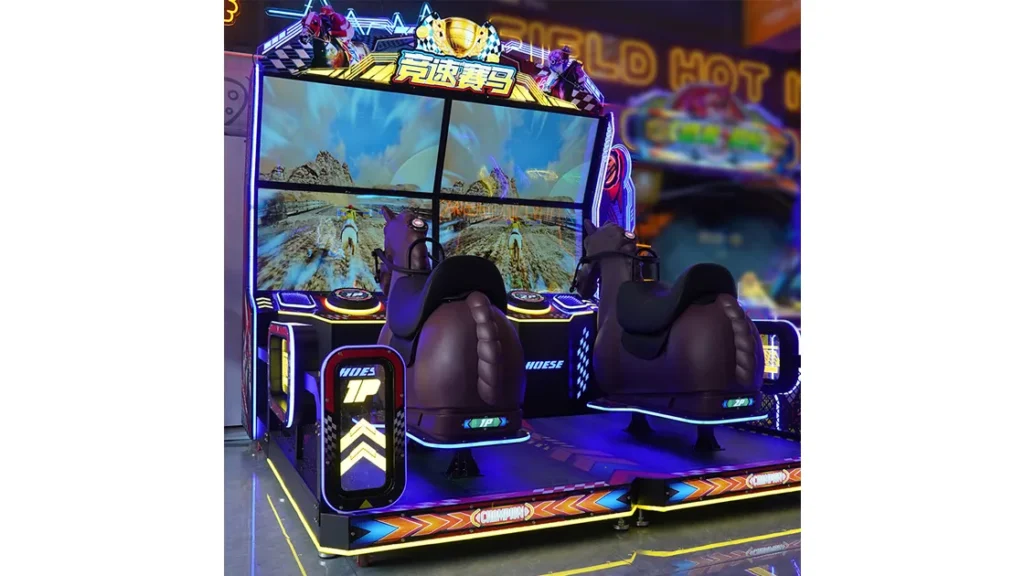
- Other Specialty Vehicles: Innovation in simulation controls offers unique fun:
- Bicycle Arcade: Players pedal to control speed with power-up mechanisms.
- Horse Race Arcade Machine: A riding model simulating equine competition.
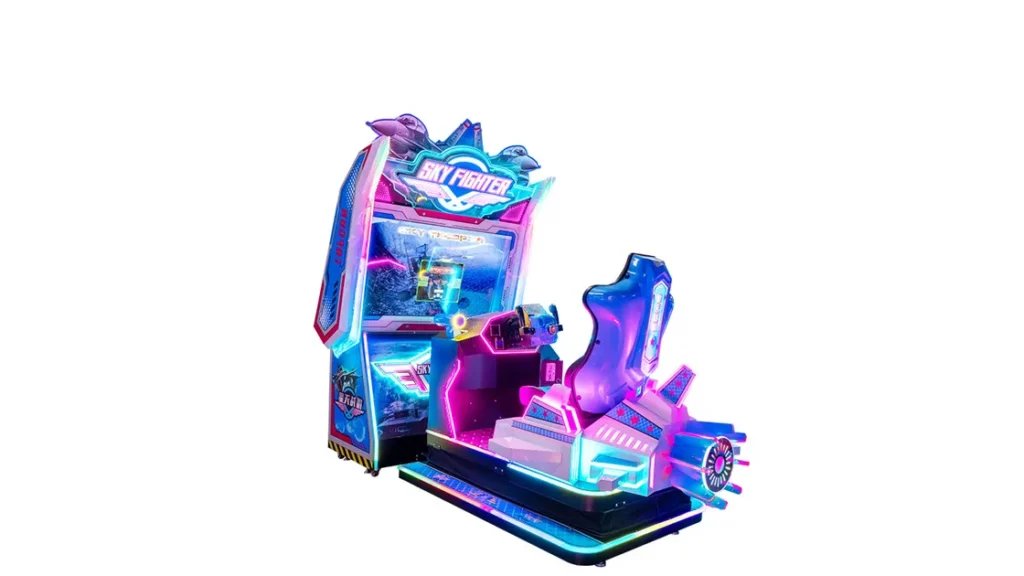
- Flight Arcade Game: Joysticks for aerial dogfighting simulations.
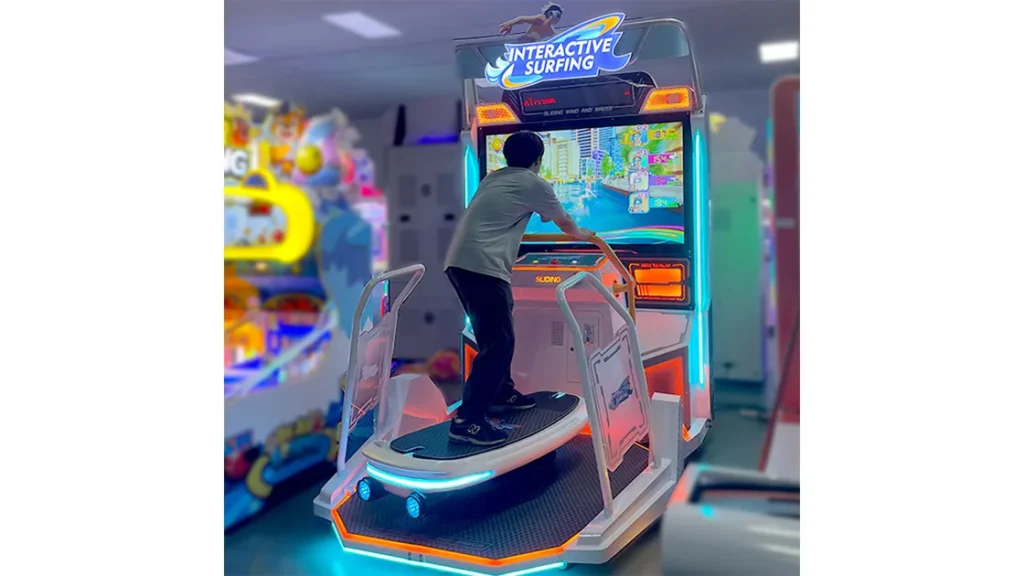
- Surfing/Skiing Simulator: Balancing platforms where weight shifting controls the game.
Classification by Gameplay Style
Based on gameplay style, they can be divided into the following three categories: Racing Arcade Machines, Motion Racing Simulators, VR Racing Simulators. The gameplay style defines the software experience—who the game is for, from casual fun to professional simulation.
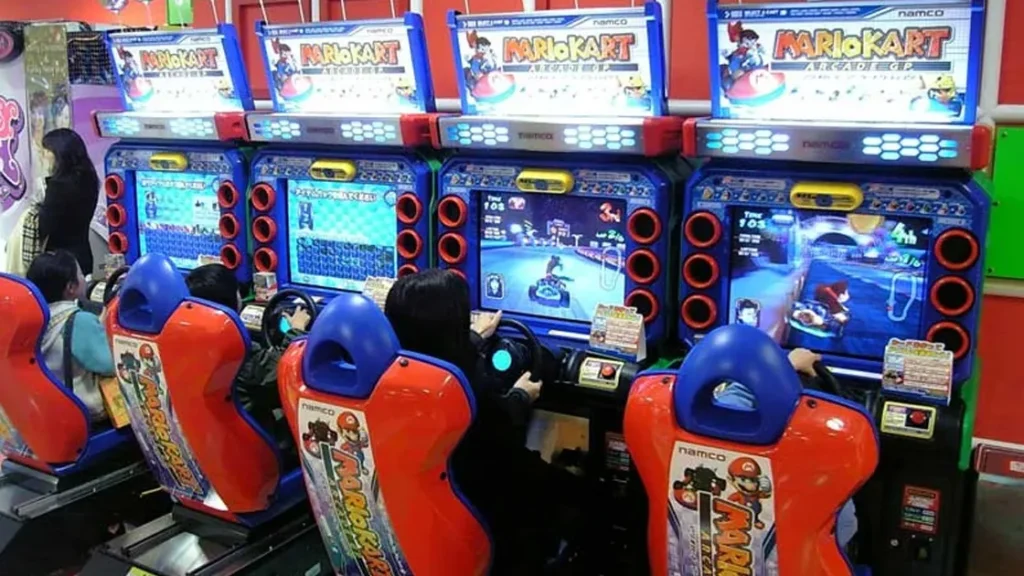
- Racing Arcade Machine (Casual Fun): These focus on accessible controls and exaggerated physics. The goal is pure, high-octane fun for all ages. Mario Kart Arcade GP is the iconic example.
- Motion Racing Simulators (Hardcore Simulation): These games strive for realistic vehicle dynamics, tire grip, and accurate physics. They usually require high-precision force-feedback wheels and appeal to automotive enthusiasts.
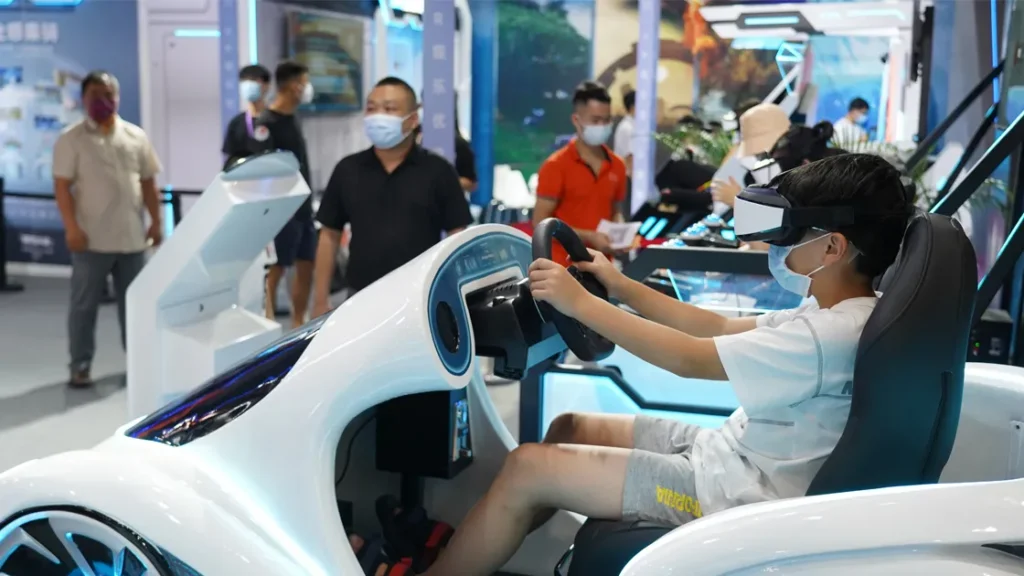
- VR Racing Simulators (The 2026 Gold Standard): The ultimate immersive experience. The player wears a VR headset for a 360-degree view. When paired with a Motion Simulator Cabinet, it provides a level of immersion that traditional displays cannot match. (As shown in the image: “VR Space Racing” from Funspace)
Procurement Selection Guide: Choosing the Right Machine
Selecting a driving arcade machine requires scientific matching of your business goals, floor space, and target ROI.
1.Selection by Location Type
- Small Venues / Cinema Lobbies: Choose Classic Sit-down Cabinets. They occupy only 1.5–0㎡ and offer the highest “revenue-per-square-meter” without requiring extra safety clearance for motion.
- Large FECs / Amusement Parks: Choose Modern Luxury / Cockpit-Style Cabinets or Motorcycle Arcades. Their visual impact and multiplayer social features are “traffic magnets” for large crowds.
- High-Tech Centers / VRTheme Parks: Choose VR Racing Simulators. These offer a premium experience that justifies higher per-play pricing.
2.Selection by Target Audience
- Families & Children: Opt for Racing Arcade Machine. Simple “automatic” controls and vibrant colors ensure all ages can participate.
- Gen Z & Young Adults: Opt for Motorcycle or VR Racing. These groups seek “social currency” (content for social media) and high-intensity thrills.
- Hardcore Fans: Opt for Racing Simulators. High-precision feedback increases the replay rate among loyal, skilled players.
Expert Technical Comparison Table
| Racing arcade machine Type | Footprint (㎡) | Control | Experience | ROI Potential |
|---|---|---|---|---|
| Upright | 0.8 - 1.2 | Wheel/Joystick | Classic/Casual | Mid |
| Sit-down | 1.5 - 2.0 | Wheel/Pedal | Arcade Racer | High |
| Deluxe Cockpit | 2.5 - 4.0 | Wheel/Pedal | Sim/Arcade | High |
| Motion Simulator | 2.5 - 4.0+ | Wheel/Pedal | VR/Sim | Maximum |
| Motorcycle | 2.0 - 3.0 | Body Lean | VR/Arcade | High |
If you want to learn more about racing arcade machines, you can browse this blog <Racing Arcade Machine Ultimate Guide (2026)>!
About Funspace Arcade Solutions
Funspace is a global leader in the design and manufacture of advanced amusement equipment, featuring a 1,500㎡ showroom and an automated production workshop. We specialize in everything from classic sit-down units to cutting-edge VR Racing Simulators. Contact our expert team for a customized amusement solution that maximizes your ROI.
Frequently Asked Questions (FAQ)
Racing arcade machines are typically divided into arcade-style racers, simulation racing machines, motorcycle racing games, networked multiplayer racing systems and VR racing simulator.
There are 4–7 main categories depending on classification: arcade racing, simulators, moto racing, kids racing games, VR racing , linked racing setups and Other Specialty Vehicles Arcade.
Arcade-style racing machines remain the most popular due to their accessibility and fast gameplay, especially in family entertainment centers.
A professional driving simulation game machine—equipped with a steering wheel, pedals, and a racing seat—designed to deliver a truly immersive competitive racing experience.
A racing simulator replicates real driving physics with realistic steering, pedals, and sometimes motion platforms.
Arcade machines prioritize fun and accessibility, while simulators focus on realism, precision, and immersive driving experiences. For a detailed comparison, please refer to the blog post below:<What Is The Difference Between Racing Simulator & Racing Arcade>
It depends on your audience. Simulators attract enthusiasts and adults, while arcade racers appeal to casual players and younger audiences.For a detailed comparison, please refer to the blog post below:<What Is The Difference Between Racing Simulator & Racing Arcade>
Car racing machines use steering wheels, while motorcycle games use leaning mechanics and handlebars, offering different gameplay experiences.
Yes, especially in high-traffic locations, as they offer a unique physical experience that attracts repeat players.
Single-player machines operate independently, while multiplayer machines can be linked to allow competitive racing.
It depends on your target audience, available space, and budget. Arcades usually benefit from a mix of machine types.
Arcade-style and multiplayer racing machines perform best due to their high engagement and quick gameplay.
Simplified arcade racing machines with colorful designs and easy controls are ideal for children.
High-end racing simulators with realistic driving physics attract adult players and enthusiasts.
Yes, combining multiple types increases engagement and broadens your audience base.
Multiplayer racing machines often generate the highest revenue due to competitive gameplay and repeat play.
Yes, for premium venues, as they offer higher pricing per play and attract a niche audience.
ROI depends on location and pricing, but many operators recover costs within 6–12 months.
Linked racing machines and popular arcade racers typically provide the fastest ROI.
Revenue comes from pay-per-play, tournaments, and increased foot traffic attraction.
Prices range from $2,000 to $20,000+ depending on type, features, and brand.
Basic arcade racing machines are the most affordable option for beginners.
Yes, especially those with motion platforms and high-end hardware.
Maintenance is generally low but depends on usage and machine complexity.
Yes, because they require multiple linked units and networking systems.
Key features include force feedback steering, HD displays, durable build, and multiplayer capability.
Advanced simulators use physics engines similar to real-world driving models.
Typical components include a screen, steering system, pedals, seat, and control board.
Yes, many machines support linking for multiplayer racing experiences.
32–55 inches is common, but larger screens enhance immersion.
Typically 1.5–9 square meters per unit depending on size and type.
Group machines together to create a competitive and immersive racing zone.
Yes, compact models are available for limited spaces.
Yes, VR racing simulators are becoming increasingly popular.
Yes, manufacturers often provide customization options for branding and features.
New machines offer better reliability and support, while used machines reduce upfront costs.
Look for manufacturers with proven experience, certifications, and after-sales support. For example, Funspace is a leading arcade machine manufacturer in China, founded in 2009, serving 3,000+ amusement parks worldwide. It offers one-stop solutions covering design, planning, and operation, with ISO9001-certified production, CE/RoHS-compliant products, and fast-response global after-sales support.
Most professional suppliers offer installation services and technical guidance—such as Funspace, a manufacturer of arcade machines based in China.
Yes, custom branding is commonly available for commercial clients.
Machines with multiplayer features and strong replay value tend to generate consistent long-term revenue.
Typically between 6–12 months depending on traffic and pricing strategy.
Competitive gameplay, realistic experience, and social interaction drive engagement.
Yes, especially with the rise of immersive entertainment and social gaming trends.
Use multiplayer setups, tournaments, and strategic placement to increase player retention.
Send Us A Message