目次
商用VR vs. ホームVR: 究極の比較
Meta Quest などのスタンドアロン VR ヘッドセットを使用する場合 3, プレイステーションVR2, そしてApple Vision Proは家庭の必需品になりつつあります, 起業家や娯楽施設運営者にとって根本的な疑問が浮上: 消費者がリビングルームでプレミアムな仮想現実にアクセスできるようになれば, なぜ位置情報エンターテインメントなのか (LBE) 市場とVRアーケード業界は飛躍的に成長すると予測されている?
答えは、商用 VR と家庭用 VR がまったく異なるエコシステム向けに構築されていることを理解することにあります。. 消費者向けハードウェアはコスト効率に重点を置いていますが、, 軽量化, そして個人の都合, 商用グレードのエンターテイメント システムは産業用の耐久性を考慮して設計されています, 最大限の物理的没入感, 高スループットの収益性. 事業主向け, 特殊な機器への投資は家庭用ゲームと競合するためのものではありません; 消費者が喜んでお金を払う、再現できない体験を提供することです.
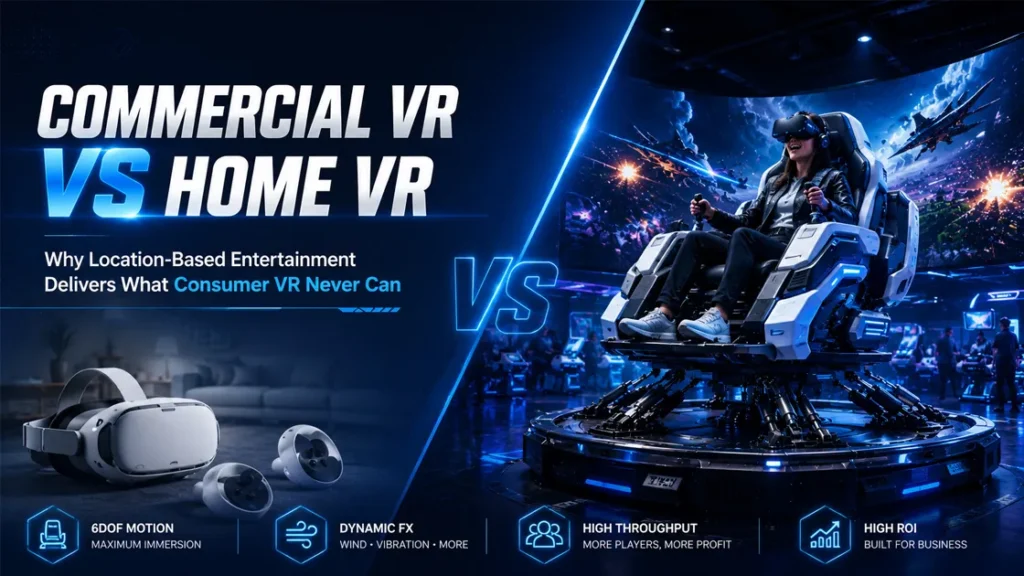
1. ハードウェア アーキテクチャと産業上の耐久性
ホーム VR ヘッドセットは軽量エンジニアリングの傑作です, しかし、それらは優しいために作られています, 個人使用. デバイスを実行する必要がある場合 10 に 12 1日何時間も, あらゆる年齢層の何百人もの興奮した顧客が対応します, コンシューマー向けビルドはほぼ瞬時に失敗します.
- 材料強度 & デューティサイクル: 商用VRゲーミングシステムは頑丈な金属シャーシを使用しています, 強化された産業グレードの配線, 継続的なライフサイクル運用のために設計された機械構造. コンポーネントはモジュール式です, アトラクション全体を分解せずに素早い交換が可能.
- 衛生 & 顧客売上高: 標準的な家庭用 VR ヘッドセットには、汗を吸収するフォーム フェイスパッドが搭載されています. 商用 VR システムには、拭き取りやすい医療グレードのレザーが組み込まれています, 抗菌シリコンインターフェース, ハイスループットの衛生基準を維持するための高度な UV-C 滅菌ステーション.
- 電源管理 & 稼働時間: 消費者向けヘッドセットはリチウム電池で動作しますが、劣化するため頻繁な充電サイクルが必要です。. 商用セットアップでは、連続有線テザー システムまたは特殊なホットスワップ可能な配電を導入して、ピーク営業時間中のゼロ ダウンタイムを保証します。.
2. ダイナミックな没入感: 多自由度モーション エコシステム
ホーム VR は、標準的なリビングルームと 2 つのハンドコントローラーの境界によって制限されます. 商用 VR は、高度なハードウェアの相乗効果により視覚データを実際の物理的な力に変換することで、この障壁を打ち破ります。.
モーションプラットフォームの力 (3-自由度 vs. 6-自由度)
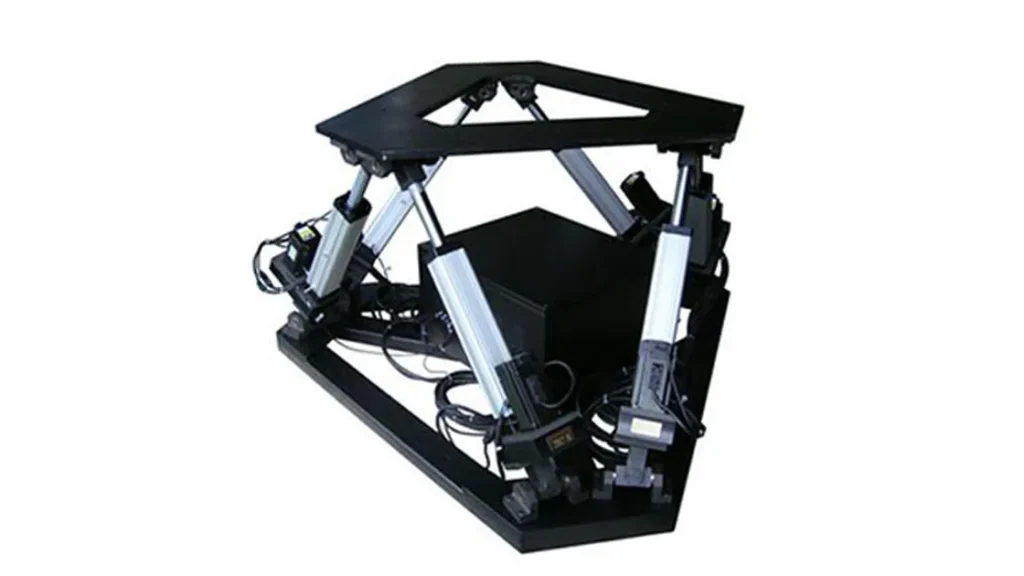
VR 商用機器は家庭では再現できない複雑な感覚統合を使用します. プレイヤーが商用シミュレーターで戦闘機を操縦したり、レーシングカーを操縦したりするとき, 高精度のアクチュエータを使用して機械式プラットフォームが動的に移動します. 標準的な 3-DOF (自由度) または 6-DOF モーション プラットフォームがソフトウェアの物理エンジンと正確に一致, 制御された慣性の誘発, ピッチ, ロール, そして盛り上がる.
環境FXの統合
本物の空間臨場感を最大限に実現し、乗り物酔いをなくすために, 商用機械はリアルタイム環境影響システムを導入します:
- 風力シミュレーター: 遠心ブロワーは、ゲーム内のユーザーの速度に基づいて速度を動的に調整します.
- 触覚フィードバック要素: シートやプラットフォームに埋め込まれた高周波トランスデューサーが爆発やエンジン回転数を正確な物理振動に変換します。.
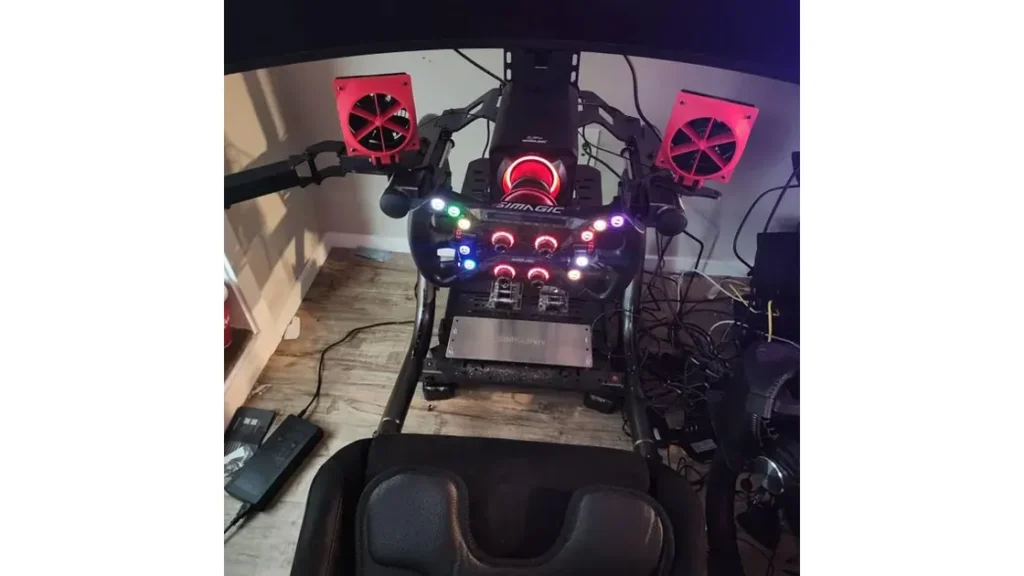
- 専用周辺機器: 抽象的なプラスチックコントローラーの代わりに, ユーザーはフォースフィードバックステアリングホイールを操作します, 加重フライトスティック, または反動をシミュレートするライフル.
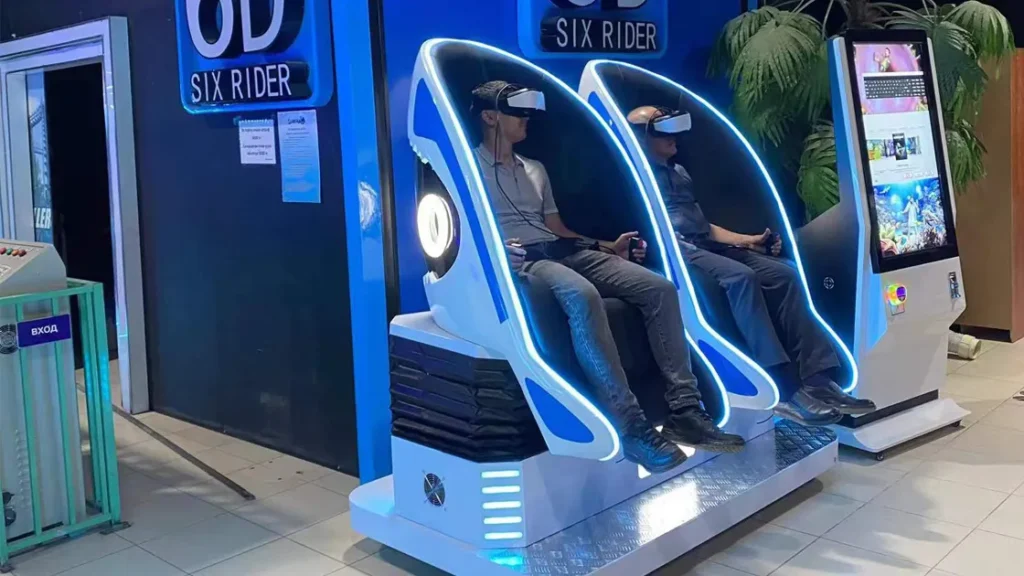
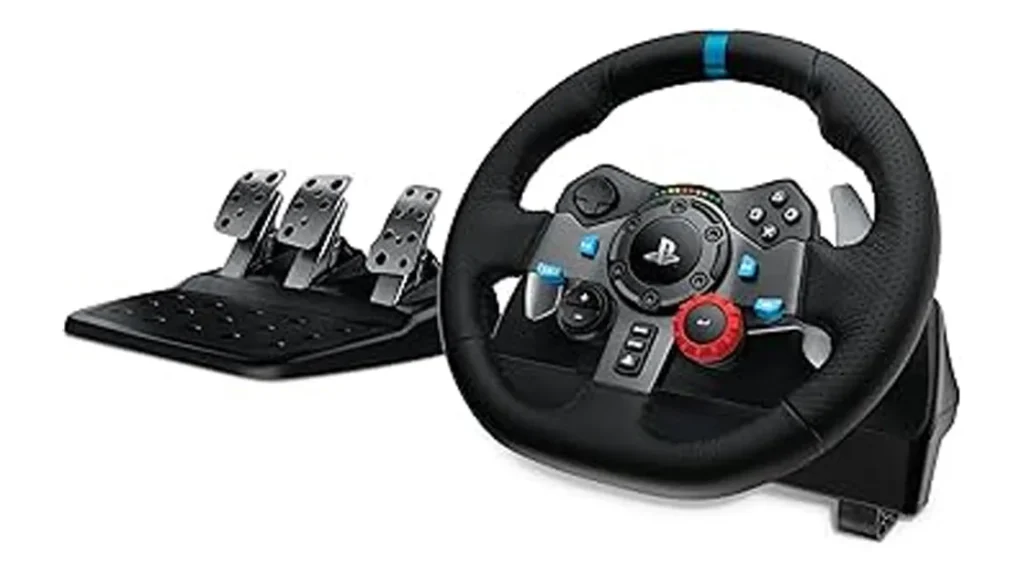
3. コアの比較: 技術的および運用上の寸法
| 機能の寸法 | ホームVR (消費者向けグレード) | 商用VR (ロケーションベース) |
|---|---|---|
| 主な目的 | 個人的な余暇, ポータブルゲーム, 費用対効果の高い消費者向けエンターテイメント. | 高スループットの収益創出, エンタープライズスケーラビリティ, 高いROI. |
| ハードウェアのライフサイクル | 軽量プラスチック製, 敏感な内部レンズ, 毎日のアクティブな使用が制限されている. | 工業用鋼/強化合金フレーム, 高耐久配線, のために作られた 10+ 毎日の時間. |
| 感覚と没入の深さ | オーディオ, ビジュアルディスプレイ, および標準のデュアルハンドヘルドトラッキングコントローラー. | 3/6-DOFモーションシート, 気流, 熱機能, 水スプレー, 香り, そして背中の振動。. |
| スペース要件 | 静的な座席または小さなルームスケールの境界 (約. 10最大×10フィート). | コンパクトなシミュレーターの設置面積から大規模なマルチユーザー フリーローム アリーナまでさまざま. |
| ソフトウェアと操作 | 個々のユーザー アカウント ストア (メタ, SteamVR), 手動ゲーム起動. | 集中アーケード管理システム (TMS) 統合された POS と自動監査を特徴とします. |
4. 経済公式: スループット, 収益化, とROI
投資の観点から見ると, 家庭用VRヘッドセットは娯楽費です. 商用VRゲーム機は高収益資産です. 商用ソフトウェアおよびハードウェア スタック全体は、アミューズメント施設の標準的なビジネス指標を最適化するように設計されています。.
運営フレームワークは、空間利用効率と顧客回転速度の最大化に大きく依存しています。. 交通量の多いアーケード アトラクションの基本的な収益計算式を検討する:
R毎時 = N座席 × Tスループット × Pチケット
どこ R (毎時) 時間当たりの総収益能力を表します, N (座席) アトラクションのプレイヤー定員です, T (スループット) は 1 時間あたりに達成されるサイクル数です (通常、読み込みウィンドウを含めて 5 ~ 6 サイクルに最適化されます。), そして P (チケット) ご当地プレミアムチケットの価格です.
市販の VR アーケード マシンは強烈な感覚フィードバックを提供するため、, 5 ~ 8 分の圧縮されたセッションは、顧客に信じられないほど満足感を与えます, 従来のアーケード ゲームと比較して、オペレーターが比類のないボリュームを達成できるようにする. さらに, 商用プラットフォームには専用の端末管理システムが装備されています (TMS). これらのソフトウェア エコシステムにより、1 人のオペレーターが複数のマシンを同時に管理できるようになります。, デジタルチケットを発行する, 正確なハードウェア使用状況分析を追跡する, 安全で自動化されたPOS統合により収益漏洩を防止します.
💡 商用 VR ゲーム システムの収益性の高い世界に参入する準備ができています?ホーム ヘッドセットが特殊な位置情報ベースのハードウェアを置き換えることができない理由がわかりました。, 事業計画の次のステップに進む. 私たちをチェックしてください [VR アーケード マシンの究極ガイド] 適切な機器の選び方を学ぶ, 正確な ROI を計算する, 位置情報ベースのエンターテイメント ビジネスを成功させる.
5. 結論: エクスペリエンスエコノミーの活用
消費者による家庭用 VR システムの導入は、実際に商業市場に利益をもたらしています. より多くの人が自宅で基本的な仮想現実を体験するにつれて, ハイエンドへの欲求, 非圧縮, 完全な触覚への没入感が高まる. 彼らは大規模な自由に歩き回れる戦場を探しています, 超現実的なレーシング構成, 構造的にも経済的にも住宅に設置することが不可能な無重力シミュレータ.
テーマパークオーナー向け, 家族のエンターテイメントセンター (FEC), そして起業家, 商用 VR 機器はデジタル ソフトウェアと物理的現実の間のギャップを橋渡しします, 安定した客足と継続的な来店を保証する、特別な目的地アトラクションを作成する.
メッセージを送ってください