目录
商业 VR 对比. 家庭虚拟现实: The Ultimate Comparison
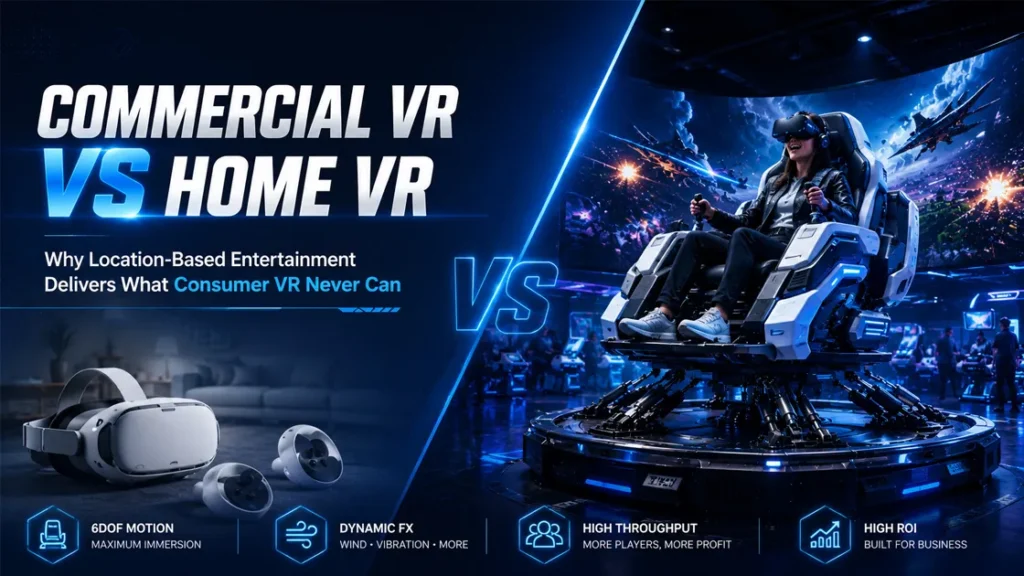
With standalone VR headsets like the Meta Quest 3, PlayStation VR2, and Apple Vision Pro becoming household staples, a fundamental question emerges for entrepreneurs and entertainment venue operators: If consumers can access premium virtual reality in their living rooms, why is the location-based entertainment (伦敦大学学院) market and VR arcade industry projected to grow exponentially?
The answer lies in understanding that Commercial VR and Home VR are built for entirely different ecosystems. While consumer-grade hardware focuses on cost-efficiency, weight reduction, and individual convenience, commercial-grade entertainment systems are engineered for industrial durability, maximum physical immersion, and high-throughput profitability. For business owners, investing in specialized equipment isn’t about competing with home gaming; it’s about offering an unreplicable experience that consumers gladly pay for.
1. Hardware Architecture & Industrial Durability
Home vr headsets are masterpieces of lightweight engineering, but they are built for gentle, individual use. When a device must run for 10 到 12 一天几个小时, handled by hundreds of excited customers of all age groups, consumer builds fail almost instantly.
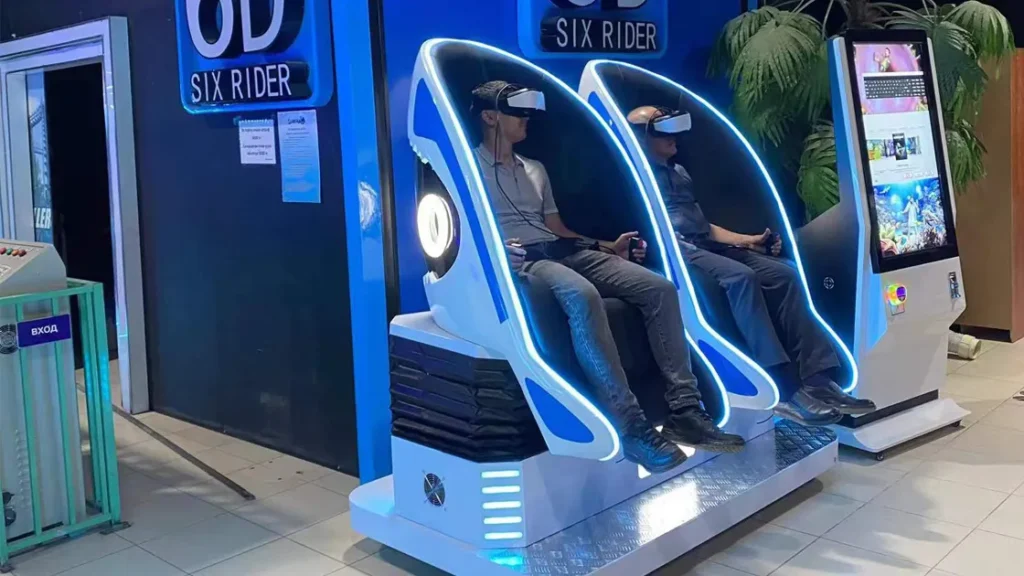
- Material Strength & Duty Cycles: Commercial vrgaming systems utilize heavy-duty metal chassis, reinforced industrial-grade wiring, and mechanical structures designed for continuous lifecycle operations. Components are modular, allowing quick replacements without dismantling the whole attraction.
- 卫生 & Customer Turnover: Standard home vrheadsets feature foam face-pads that absorb sweat. Commercial vr systems integrate easy-wipe medical-grade leather, antibacterial silicone interfaces, and advanced UV-C sterilization stations to maintain high-throughput hygiene standards.
- Power Management & Uptime: Consumer headsets run on lithium batteries that degrade and require frequent recharging cycles. Commercial setups deploy continuous wired tether systems or specialized hot-swappable power distributions to guarantee zero downtime during peak business hours.
2. Dynamic Immersion: The Multi-DOF Motion Ecosystem
Home VR is limited by the boundaries of a standard living room and two hand controllers. Commercial VR breaks this barrier by transforming visual data into actual physical forces through advanced hardware synergy.
The Power of Motion Platforms (3-DOF vs. 6-自由度)
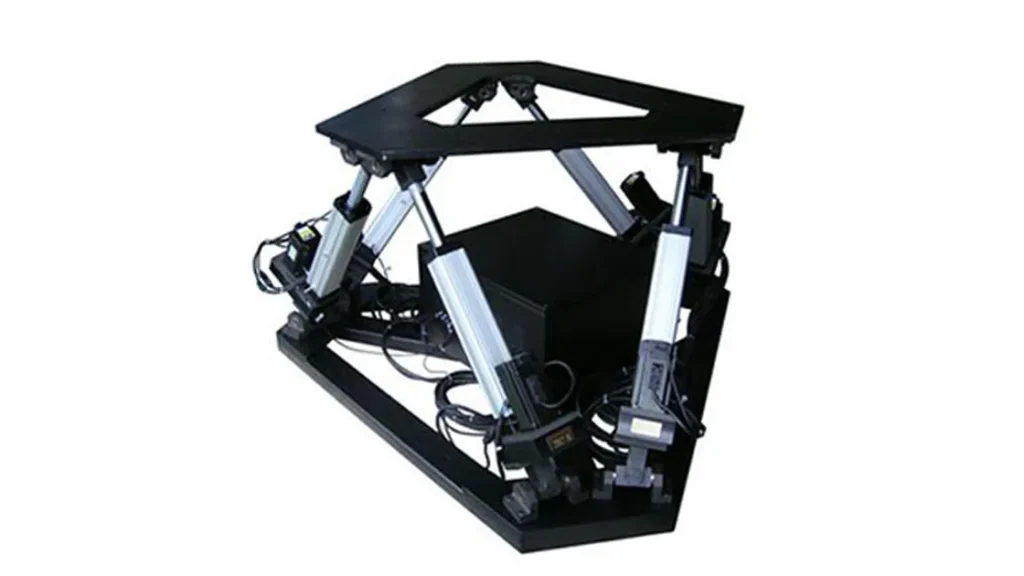
VR commercial equipment use complex sensory integration that cannot be replicated at home. When a player flies a fighter jet or steers a racing car in a commercial simulator, the mechanical platform shifts dynamically using highly precise actuators. A standard 3-DOF (Degree of Freedom) or 6-DOF motion platform matches the exact physics engine of the software, inducing controlled inertia, pitch, 卷, and heave.
Environmental FX Integration
To fully achieve true spatial presence and eliminate motion sickness, commercial machines deploy real-time environmental effect systems:
- Wind Simulators: Centrifugal blowers adjust speed dynamically based on the user’s velocity in the game.
- Haptic Feedback Elements: High-frequency transducers embedded in seats or platforms translate explosions and engine revs into precise physical vibrations.
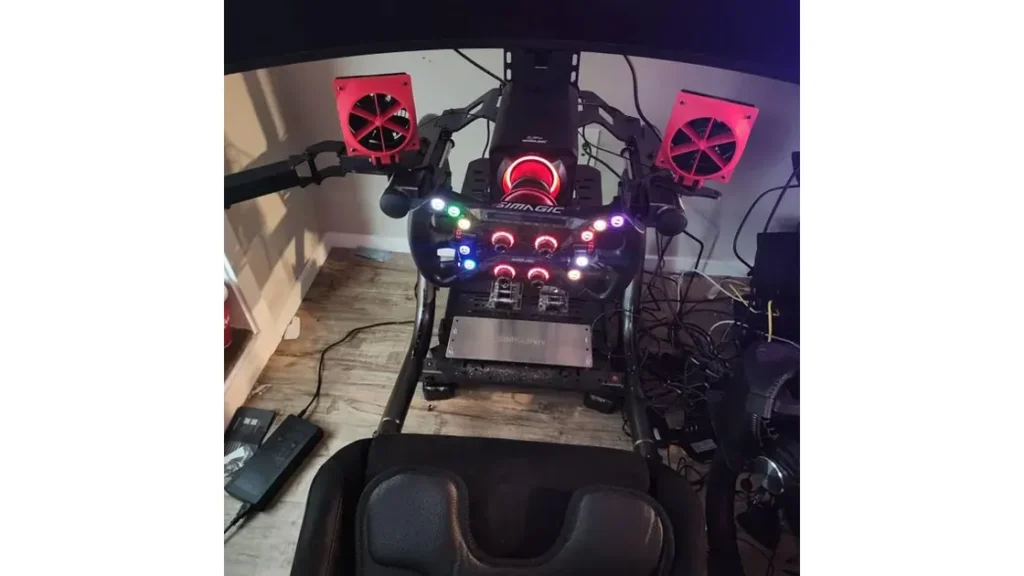
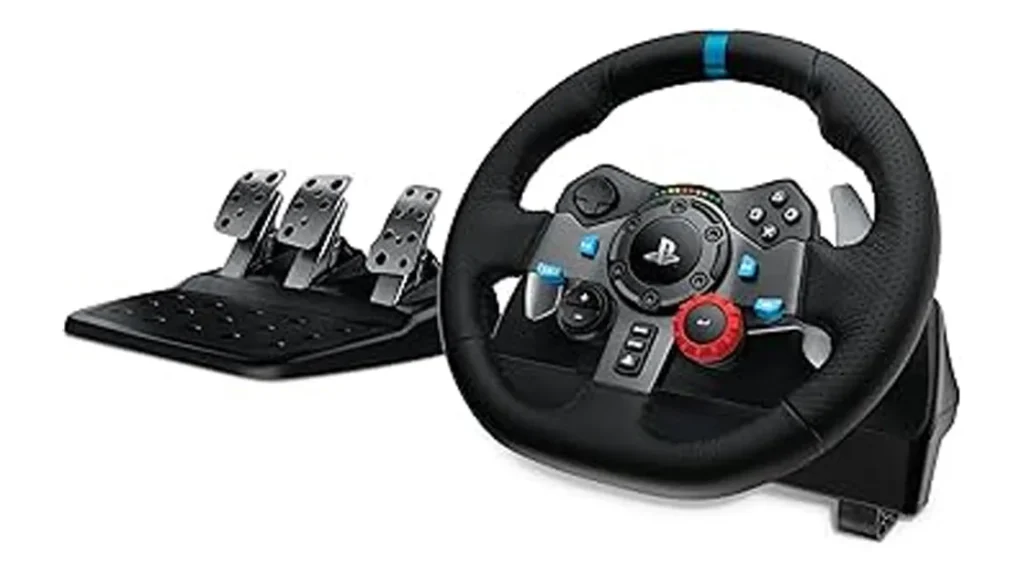
- Specialized Peripherals: Instead of abstract plastic controllers, users handle force-feedback steering wheels, weighted flight sticks, or recoil-simulating rifles.
3. Core Comparison: Technical & Operational Dimensions
| Feature Dimension | 家庭虚拟现实 (Consumer-Grade) | 商业虚拟现实 (Location-Based) |
|---|---|---|
| Primary Objective | Personal leisure, portable gaming, cost-effective consumer entertainment. | High-throughput revenue generation, enterprise scalability, and high ROI. |
| Hardware Lifecycle | Lightweight plastic builds, sensitive internal lenses, limited daily active use. | Industrial steel/reinforced alloy framing, high-durability wiring, built for 10+ hours daily. |
| Sensory & Immersion Depth | 声音的, visual display, and standard dual handheld tracking controllers. | 3/6-自由度运动座椅, 空气流动, heat function, 喷水, 香味, and back vibration.. |
| 空间要求 | Static seating or small room-scale boundaries (大约. 10x10 ft maximum). | Varies from compact simulator footprints to large-scale multi-user free-roam arenas. |
| Software & Operations | Individual user account stores (Meta, SteamVR), manual game launching. | Centralized Arcade Management Systems (TMS) featuring integrated POS and automated auditing. |
4. The Economic Formula: 吞吐量, Monetization, and ROI
From an investment standpoint, a home VR headset is an entertainment expense. A commercial VR game machine is a high-yield asset. The entire commercial software and hardware stack is designed to optimize the standard business metrics of an amusement venue.
The operational framework relies heavily on maximizing spatial utilization efficiency and customer turnover speed. Consider the basic profitability formula for a high-traffic arcade attraction:
在哪里 右 (hourly) represents the gross hourly revenue capacity, N (座位) is the player capacity of the attraction, T (吞吐量) is the number of cycles achieved per hour (typically optimized to 5–6 cycles inclusive of loading windows), 和 磷 (ticket) is the local premium ticket price.
Because a commercial vr arcade machine delivers intense sensory feedback, a compressed 5-to-8-minute session feels incredibly satisfying to a customer, allowing operators to achieve unparalleled volume compared to traditional arcade games. 此外, commercial platforms come equipped with dedicated Terminal Management Systems (TMS). These software ecosystems allow a single operator to manage multiple machines simultaneously, issue digital ticketing, track exact hardware usage analytics, and prevent revenue leakage through secure automated point-of-sale integrations.
💡 Ready to Enter the Profitable World of Commercial VR gaming systems?Now that you understand why home headsets can never replace specialized location-based hardware, take the next step in planning your business venture. Check out our [VR街机终极指南] to learn how to choose the right equipment, calculate your precise ROI, and launch a successful location-based entertainment business.
5. 结论: Capitalizing on the Experience Economy
The consumer adoption of home VR system has actually benefited the commercial market. As more individuals experience basic virtual reality at home, their appetite for higher-end, uncompressed, fully tactile immersion grows. They look for massive free-roam battlefields, hyper-realistic racing configurations, and zero-gravity simulators that are structurally and financially impossible to install in a house.
For theme park owners, 家庭娱乐中心 (FEC), and entrepreneurs, commercial VR equipment bridges the gap between digital software and physical reality, creating an exclusive destination attraction that ensures steady foot traffic and continuous returns.
给我们发信息