
Share:
Table Of Contents
VR Machine Price Guide 2026: Cost, ROI, and Buyer’s Checklist
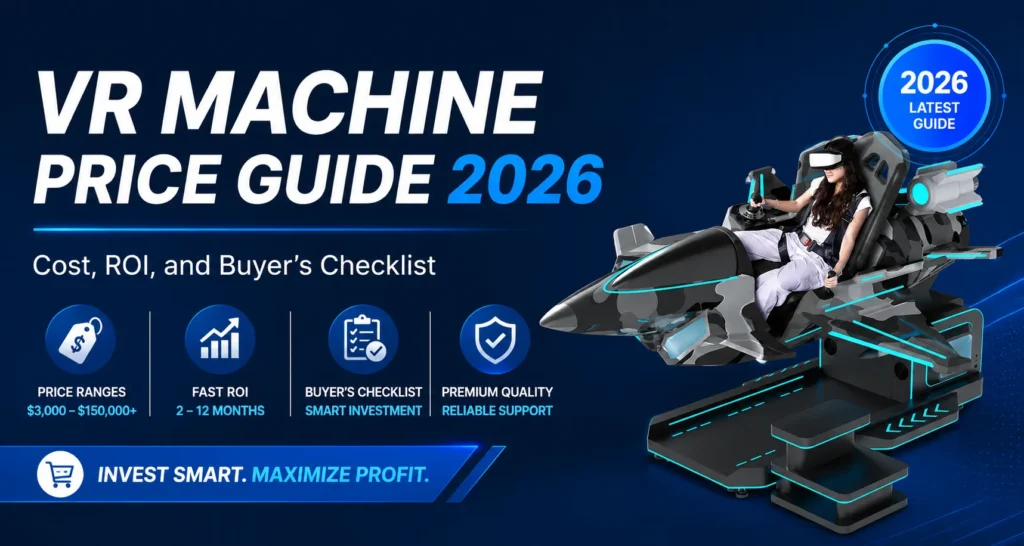
Investing in commercial VR (Virtual Reality) arcade machines is one of the most profitable decisions for modern Family Entertainment Centers (FECs), shopping malls, and amusement parks in 2026. However, if you are sourcing equipment from global manufacturers, you’ve probably noticed a massive price gap—some machines cost $3,000, while others exceed $150,000.
Why is there such a huge variance in the commercial vr gaming machine price? What configurations are actually worth your money? And most importantly, how do you balance your initial investment with long-term ROI?
This 2026 VR Machine Price Guide breaks down the exact costs, uncovers hidden expenses, and provides a clear budgeting framework to help you generate maximum inquiry value and high-turnover revenue.
How Much Does a VR Arcade Machine Cost? (2026 Price Matrix)
To give you an immediate baseline, commercial vr machine prices generally range from $3,000 to over $150,000+, depending on technology, capacity, and motion mechanics.
Below is the definitive 2026 cost matrix, including the estimated payback period based on real global FEC operational data.
| Machine Type | Average Price Range (USD) | Best Suited For | Est. Payback Period (ROI Timeline) |
|---|---|---|---|
| Kids VR Machine | $3,000 – $6,000 | Malls, Kids Zones, Supermarkets | 2 – 3 Months |
| VR Racing Simulator | $6,000 – $20,000 | Arcades, Sports Bars, FEC Anchors | 3 – 5 Months |
| VR Shooting Simulator | $10,000 – $25,000 | Gaming Centers, Theme Parks | 4 – 6 Months |
| VR Flight Simulators | $7,000 – $15,000 | Aviation Centers, Science Museums, VR Arcades, Family Entertainment Venues | 4 – 7 Months |
| 9D VR Simulator | $7,000 – $150,000+ | High-traffic Malls, Adventure Parks | 5 – 12 Months |
| Free Roam VR | $20,000 – $50,000+ | Large FECs, Destination Venues | 6 – 12 Months |
What Affects Commercial VR Machine Prices?
When sourcing from a manufacturer, you aren’t just paying for the VR headset. The price tag is determined by several core industrial components:
1. Motion Platform: Static vs. Dynamic (3/6 DoF)
- Static VR (Low Cost): The player sits or stands still. The immersive feel relies entirely on the headset.
- Dynamic VR (Premium Cost): Features a 3 DoF (Degrees of Freedom) or 6 DoF electric motion platform. High-end machines utilize industrial-grade electric servo motors instead of cheap pneumatic/hydraulic systems. Servo motors provide precise, zero-delay synchronization with the game, which eliminates motion sickness and commands a much higher ticket price.Consequently, the integrated servo technology is a primary driver of a premium virtual reality machine price.
2. Hardware Grade: Consumer vs. Commercial-Grade
Why do players pay for what they can experience at home? While Home VR relies on standalone headsets and simple controllers limited by living room space, Commercial VR delivers massive sensory immersion through heavy-duty industrial PCs and dynamic 3-6 DoF motion platforms.
Commercial machines unlock full multi-sensory haptics—including wind, odor, heat, water spray, vibrating seats, and force-feedback weapons—within dedicated free-roam tracked spaces. Running exclusive, high-throughput arcade games optimized for 2–5 minute sessions, this extreme experience justifies premium ticket prices and drives rapid venue ROI.
3. Player Capacity & Throughput
A 1-player (1P) machine has a lower entry cost but limits your hourly throughput. 2-player (2P), 4-player (4P), or While multi-user open space arenas demand a higher initial virtual reality machine price, they duplicate hardware to offer up to 400% higher revenue capacity during weekend peak hours.
4. Game Content Licensing
Legitimate manufacturers (Like Funspace) invest heavily in copyright-authorized and exclusive game content. Premium machines come pre-loaded with high-definition, proprietary games and offer cloud-based system updates. Low-cost copycat machines often run cracked, unoptimized software that glitches constantly and exposes your business to copyright lawsuits.
Popular Virtual Reality Machine Price Ranges
VR Paraglider Price & ROI
- Price Range: $7,000 – $14,000+
- Target Audience: Adventure seekers, tourists, teens, and families (Ages 8+).
- ROI:4 – 6 Months
- ROI Insight: This VR Paraglider innovatively integrates paragliding aesthetics, generating a powerful “crowd-drawing” effect that naturally attracts onlookers. The dual-player mode—enhanced by special wind and water effects alongside our proprietary dynamic simulation technology—instantly boosts peak-hour revenue by 100%. With a “golden” game cycle of just four minutes, the unit achieves a significantly high turnover rate; thanks to this rapid throughput and its ability to attract heavy foot traffic, it stands as a benchmark VR attraction known for offering one of the fastest capital payback periods in the industry.

VR 360 Chair Price & ROI
- Price Range: $3,500 – $11,000+
- Target Audience:Thrill-seekers, roller coaster fans, teenagers, and young couples.
- ROI:3– 7 Months
- ROI Insight: The VR 360 Chair is the ultimate “Crowd Magnet” due to its extreme spectator value—seeing players flip completely upside down draws immediate foot traffic. While a 1P model offers a highly affordable vr gaming machine price for small kiosks, the 2P dual-seat setup is highly recommended for full-scale arcades to double your revenue potential.

VR Egg Chair Price & ROI
- Price Range: $3,000 – $7,000+
- Target Audience:Families with kids, casual gamers, shopping mall shoppers, and first-time VR users.
- ROI:4 – 6 Months
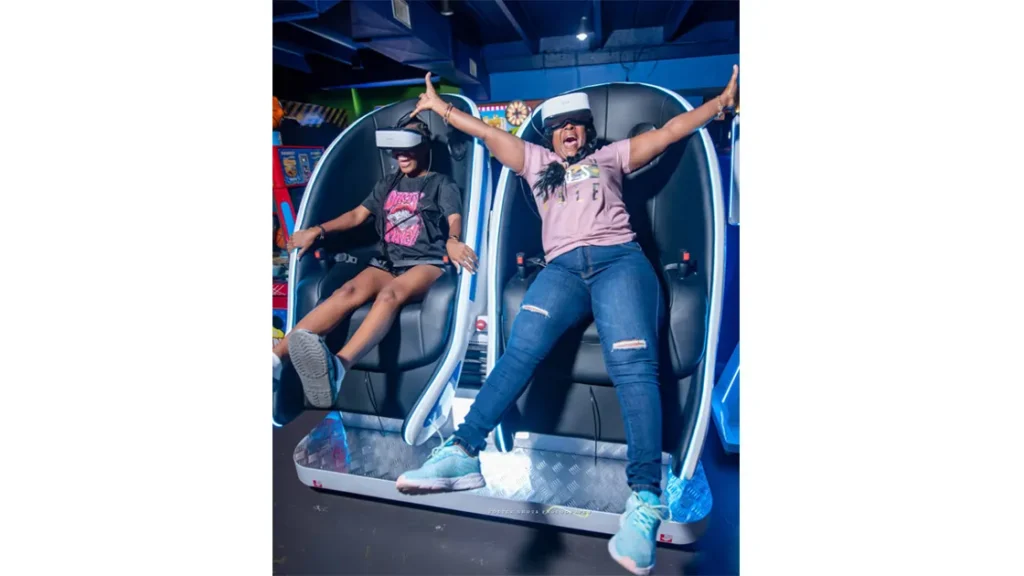
- ROI Insight: The VR Egg Chair (or 9D VR Capsule) represents the most accessible 9d virtual reality simulator price point, making it a classic, low-risk entry point for any entertainment venue. Because of its enclosed futuristic design and gentle-to-moderate motion simulation, it has the widest demographic appeal—making it highly stable for passive income. While the 1P model features an incredibly low upfront investment for tight spaces like supermarket entrances, the 2P dual-seat model is the industry standard for shopping malls, as it allows parents to ride with children, instantly unlocking family-budget spending.
VR Space Ride Price & ROI
- Price Range: $20,000 – $80,000+
- Target Audience:Group parties, large families, school field trips
- ROI:6– 14 Months
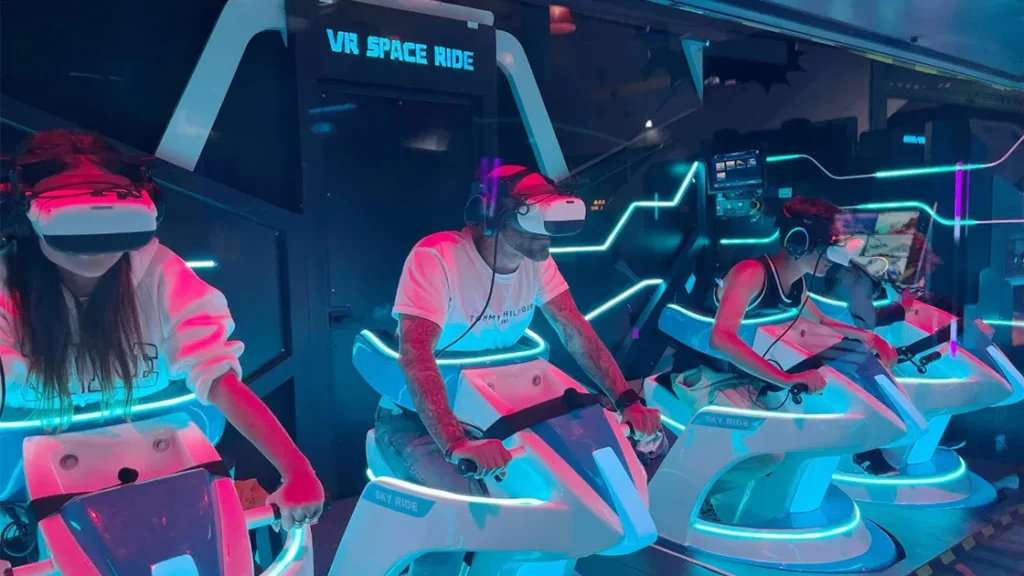
- ROI Insight: Requiring a mere 30+ square meters of space, this VR Space Ride integrates a suite of sensory effects—including wind, scents, and water—to establish a benchmark standard for flying theater attractions. The system supports flexible configurations for groups of 2 to 24 people, thereby overcoming the spatial efficiency constraints typical of single-user VR systems. It elevates solitary experiences into engaging, shared social events, enabling the robust capture of large-scale bookings—ranging from corporate team-building and educational tours to private parties—and utilizing powerful economies of scale to guarantee a steady and secure return on investment.
Hidden Costs of Importing and Operating VR Arcade Machines
Smart FEC owners know that the Ex-Works (EXW) factory price is only the first line item on the budget. To avoid cash flow surprises, calculate these essential operational factors:
Logistics, Customs, and Compliance
- Shipping & Freight: VR machines are large, heavy, and require secure wooden crate packaging. Ocean freight, local port fees, and inland trucking must be budgeted.
- Import Tariffs: Depending on your country (US, EU, Middle East), amusement equipment incurs specific customs duties.
- Compliance Certifications: Ensure your manufacturer provides CE, RoHS, and SASO certifications. Without these, your equipment may be seized at customs, or your local fire/safety inspector may refuse to let you open.
Technical Support & Installation
- On-site vs. Remote: Flying an engineer out for installation adds travel, visa, and daily labor costs. Look for manufacturers that provide plug-and-play modular setups with comprehensive English video guides and 24/7 remote cloud diagnostics to save thousands.
Round or smooth plush toys are especially difficult to hold securely.
Operational Personnel Efficiency (Staffing Costs)
- Labor Drain: If a machine requires one dedicated staff member to manage just one player, your labor margins will shrink.
- Self-Service Automation: Modern premium VR machines support integrated card-swiping systems, coin acceptors, or QR code scanning. Opt for self-service setups where a single employee can oversee 4 to 6 machines simultaneously.
Cheap vs. Premium VR Machines: Why Initial Savings Can Kill Your FEC
It is tempting to buy from a backyard workshop offering a virtual reality machine price that is 40% below the market average. However, in the amusement industry, cheap equipment is often the most expensive mistake you can make.
The Reality of Cheap VR Machines:
When a factory offers an unbelievably low vr 9d machine price, they are usually cutting corners on the internal hardware, using refurbished graphics cards and fragile plastic parts instead of fiberglass. Low-end suppliers use refurbished graphics cards, fragile plastic parts instead of fiberglass, and uncalibrated motion motors.
If a machine breaks down on a Saturday afternoon, you aren’t just losing that day’s revenue; you are damaging your venue’s reputation. Cheap suppliers rarely offer English-speaking technical support or stable spare parts supply chains, leaving you with a useless piece of hardware taking up valuable square footage.
Choosing a premium, verified manufacturer (Like Funspace) ensures:
- Brand-new, industrial-grade components (NVIDIA, HTC Vive/Pico Business enterprise headsets).
- Structural engineering safety testing to prevent mechanical accidents.
- Minimum 1-year comprehensive warranty and lifetime software system support.
Conclusion & Sourcing Action Plan
Sourcing the right VR arcade machines isn’t about finding the lowest vr machine prices—it’s about maximizing revenue per square meter and ensuring operational stability. By aligning your budget with commercial-grade hardware and calculating your hidden operational costs upfront, you guarantee a sustainable, high-ROI business model.
Ready to build your revenue-generating VR zone? Take the next step:
[Download the Full 2026 VR Machine Catalog with Price List] – Get instant access to factory-direct wholesale pricing, detailed dimensions, and power specifications.
[Get a Free Customized 3D Venue Layout ] – Share your floor plan with our project consultants, and we will map out a customized equipment layout designed to maximize foot-traffic flow and profit.
Want to know more about VR Arcade Machines? read our complete guide: Ultimate Guide to VR Arcade Machines
FAQ About VR Machine Prices
Commercial VR machine prices in 2026 typically range from $3,000 to over $150,000+, depending on the machine type, motion platform technology, player capacity, and included game content. Entry-level VR kiddie rides are usually the most affordable option, while large free-roam VR arenas and multiplayer motion simulators require significantly higher investment.
The biggest price differences usually come from hardware quality, motion systems, and software content. Low-cost VR machines often use refurbished PCs, outdated VR headsets, weak motion platforms, and cracked game software. Premium commercial VR machines use industrial-grade components, enterprise VR hardware, servo motor systems, and professionally optimized games designed for long-term commercial operation.
Most commercial VR machine quotations typically include:
- VR machine hardware
- Motion platform system
- VR headset
- Basic game package
- Operating software
- Factory testing before shipment
However, international shipping, import duties, local installation, and future game upgrades are usually not included unless specifically stated in the quotation.
International shipping costs depend on the machine size, destination country, and transportation method. Small VR rides may cost around $500–$2,000 for sea freight shipping, while large multiplayer VR simulators or free-roam systems may require $5,000–$20,000+ due to oversized packaging, container freight, and local port charges.
Besides the factory price, buyers should also budget for:
- International shipping and customs duties
- Local installation and site preparation
- Electrical setup requirements
- Spare parts and maintenance
- Software or game updates
- Operator staffing costs
Understanding these hidden operational expenses is essential for accurately calculating long-term ROI.
Most commercial VR arcade machines achieve ROI within 3 to 12 months under stable foot traffic conditions. Machines with strong visual appeal, multiplayer interaction, and short game cycles usually recover investment faster. Actual ROI depends on ticket pricing, venue location, customer traffic, and daily operating hours.
Cheap VR machines may reduce upfront investment costs, but they often create higher long-term risks. Low-end machines are more likely to suffer from unstable motion systems, hardware failures, poor customer experience, and limited technical support. In commercial entertainment venues, machine downtime directly impacts revenue and customer satisfaction, making reliability more important than simply choosing the lowest price.
VR machines with high player throughput and strong spectator appeal generally offer the fastest ROI. Currently, VR 360 Chairs, VR Racing Simulators, VR Shooting Simulators, and compact Kids VR Game Machines are among the fastest-paying commercial VR attractions. Their short gameplay cycles and repeat-play potential make them highly effective for malls, arcades, and family entertainment centers.
Send Us A Message